 0009-0001-9737-3262
  dir.xport@conchita.alinet.cu
Diana de la Nuez Hernández2
0000-0002-2184-2034 diana@upr.edu.cuCarlos Cesar Torres Paez2
0000-0001-7956-5079 carlosc@upr.edu.cu

Cooperativismo y Desarrollo, September-December 2026; 14(3), e1001
Translated from the original in Spanish
Original article
Procedure for managing exports at vegetable canning companies
Procedimiento para la gestión de la exportación en empresas de conservas de vegetales
Procedimento para a gestão da exportação em empresas de conservas vegetais
Yanitza Pereda Aguado1 0009-0001-9737-3262 dir.xport@conchita.alinet.cu
Diana de la Nuez Hernández2 0000-0002-2184-2034 diana@upr.edu.cu
Carlos Cesar Torres Paez2 0000-0001-7956-5079 carlosc@upr.edu.cu
1 Vegetable Canning Company "La Conchita". Cuba.
2 University of Pinar del Río "Hermanos Saíz Montes de Oca". Cuba.
Received: 2/06/2026
Accepted: 1/10/2026
ABSTRACT
Internationalization is a strategic imperative for Cuban state-owned enterprises in a competitive global environment. Although La Conchita Vegetable Canning Company obtained its direct export license in July 2024, it faces limitations in maintaining a competitive export capacity. The research addressed the following scientific problem: How to contribute to improving the process of managing La Conchita's internationalization? The general objective was to design a procedure for managing the export of goods and services that would promote the internationalization of vegetable canning companies. Theoretical methods, such as the historical-logical and analysis-synthesis, were employed, along with empirical procedures, including document analysis, surveys of importing clients and employees, and interviews with executives. Methodological triangulation and statistical analysis were also employed. The results of the empirical assessment revealed shortcomings in the organizational structure, limited training in exporting, and delays in commercial processes. The designed procedure helped organize export management into four phases: strategic planning, operational organization, executive implementation, and control with continuous improvement. The practical validation conducted in 2025 yielded favorable results: a reduction in response time to 36 hours, an increase in the NPS score from +19.9 to +35, a rise in the repurchase rate from 20% to 68%, and an improvement in the net margin to 14.5%. It is concluded that commercial autonomy and systematized management promote more efficient and sustainable internationalization.
Keywords: export competitiveness; canned vegetables; export process management; business internationalization.
RESUMEN
La internacionalización constituye un imperativo estratégico para las empresas estatales cubanas en un entorno global competitivo. La Empresa de Conservas de Vegetales La Conchita, aunque obtuvo su licencia de exportación directa en julio de 2024, enfrenta limitaciones para sostener una capacidad exportadora competitiva. La investigación tuvo como problema científico: ¿Cómo contribuir al perfeccionamiento del proceso de gestión de la internacionalización de La Conchita? El objetivo general consistió en diseñar un procedimiento para la gestión de la exportación de bienes y servicios que potenciara la internacionalización de empresas de conservas de vegetales. Se emplearon métodos teóricos, como el histórico-lógico y el análisis-síntesis; procedimientos empíricos, entre ellos análisis documental, encuestas a clientes importadores y a trabajadores, así como entrevistas a directivos. También se utilizó la triangulación metodológica y análisis estadístico. Los resultados del diagnóstico empírico evidenciaron insuficiencias en la estructura organizacional, limitada capacitación en exportación y demoras en los procesos comerciales. El procedimiento diseñado contribuyó a la organización de la gestión exportadora en cuatro fases: planificación estratégica, organización operativa, implementación ejecutiva y control con mejora continua. La validación práctica realizada en 2025 mostró resultados favorables: reducción del tiempo de respuesta a 36 horas, incremento del índice NPS de +19.9 a +35, aumento de la tasa de recompra del 20 % al 68 % y mejora del margen neto hasta 14.5 %. Se concluye que la autonomía comercial y una gestión sistematizada favorecen una internacionalización más eficiente y sostenible.
Palabras clave: competitividad exportadora; conservas de vegetales; gestión del proceso de exportación; internacionalización empresarial.
RESUMO
A internacionalização constitui um imperativo estratégico para as empresas estatais cubanas em um ambiente global competitivo. A Empresa de Conservas de Vegetais La Conchita, embora tenha obtido sua licença de exportação direta em julho de 2024, enfrenta limitações para manter uma capacidade exportadora competitiva. A pesquisa teve como problema científico: como contribuir para o aperfeiçoamento do processo de gestão da internacionalização da La Conchita? O objetivo geral consistiu em elaborar um procedimento para a gestão da exportação de bens e serviços que impulsionasse a internacionalização de empresas de conservas de vegetais. Foram empregados métodos teóricos, como o histórico-lógico e a análise-síntese; procedimentos empíricos, incluindo análise documental, pesquisas com clientes importadores e trabalhadores, bem como entrevistas com gestores. Também foram utilizados a triangulação metodológica e a análise estatística. Os resultados do diagnóstico empírico evidenciaram insuficiências na estrutura organizacional, capacitação limitada em exportação e atrasos nos processos comerciais. O procedimento elaborado contribuiu para a organização da gestão exportadora em quatro fases: planejamento estratégico, organização operacional, implementação executiva e controle com melhoria contínua. A validação prática realizada em 2025 apresentou resultados favoráveis: redução do tempo de resposta para 36 horas, aumento do índice NPS de +19,9 para +35, aumento da taxa de recompra de 20% para 68% e melhoria da margem líquida para 14,5%. Conclui-se que a autonomia comercial e uma gestão sistematizada favorecem uma internacionalização mais eficiente e sustentável.
Palavras-chave: competitividade exportadora; conservas de vegetais; gestão do processo de exportação; internacionalização empresarial.
INTRODUCTION
The need to enter international markets is growing increasingly urgent in the Cuban context, as it is a priority for the country's top leadership and a constant challenge for socialist state-owned enterprises, especially in light of changes in an increasingly turbulent environment and growing technological advances that influence the implementation of new business practices, focused on achieving quality and stability (Fletcher Calipolitti et al., 2025). Today, internationalization goes beyond mere export activity and involves companies of all sizes on every continent, although exporting remains the most basic and accessible route for small and medium-sized enterprises (SMEs) in the agri-food sector (Gallardo Figueroa et al., 2024).
Among the main issues affecting the development of export strategies is export awareness, as there are companies with the potential and resources to enter the international market but fail to recognize the opportunity to expand (Barrios Cruz & Torres Paez, 2019). In Cuba, foreign trade management has faced challenges related to international price fluctuations, domestic logistics, and financial constraints. The Ministry of Foreign Trade and Foreign Investment (MINCEX) states that the fundamental purpose of exporting entities is to diversify markets and ensure proper product positioning (Ministry of Foreign Trade and Foreign Investment, 2022).
In this context, canning companies face the challenge of optimizing their export processes to ensure quality, regulatory compliance, and market positioning. Authors such as Ganoza Alemán (2026) emphasize that market diversification is essential for export success. This research is conducted at La Conchita Vegetable Canning Company (ECV), which is part of the Agri-Food Industry Business Group. The problematic situation includes high export costs, a lack of awareness among executives regarding the company's export potential, insufficient production linkages, an inadequate workforce in the export department, and fierce global competition. To date, the company has responded to ad hoc demands, which limits its ability to devise effective strategies.
An analysis of the company's internationalization process led to the formulation of the following research question: How to contribute to improving the management of the internationalization process at La Conchita Vegetable Canning Company? The objective was to design a procedure for managing the export of goods and services that would help unlock the potential for the internationalization of vegetable canning companies.
MATERIALS AND METHODS
The research was conducted during the 2024-2025 period at ECV La Conchita, located in the province of Pinar del Río, Cuba. A mixed-methods (qualitative-quantitative) approach and a case study design were employed, following the diagnostic stages proposed by Sixto Rodríguez and de la Nuez Hernández (2023).
The historical-logical method was used to analyze the evolution of internationalization in the canning industry, and analysis-synthesis was employed to reveal the essential relationships of exporting as a fundamental form of internationalization.
Four research tools were applied:
The qualitative data (interviews) and quantitative data (surveys of customers and employees) were triangulated using an analysis of convergences, divergences, and complementarities. SPSS version 29 statistical software was used for descriptive and frequency analysis, and PASS software was used to calculate the sample size. To analyze secondary data on export procedures in Cuba, the Kimi language model (Moonshot AI, 2026) was consulted on January 3, 2026, using specific prompts, and copies of the responses were saved to ensure traceability.
RESULTS AND DISCUSSION
The documentary analysis revealed that, although ECV La Conchita obtained a direct license as an export/import company in July 2024, its organizational structure exhibits a critical inconsistency: commercial and marketing functions are delegated to the Logistics Business Unit, creating a conflict of priorities between operational efficiency (minimizing costs) and market strategy (maximizing brand value). This confusion is acknowledged by 85% of the surveyed employees, who are unaware of who actually leads the export operations. This finding aligns with Águila and Díaz Macías (2020), who note that the lack of an autonomous export management structure is a common barrier in Cuban companies undergoing transition.
The survey of 26 importing customers showed a significant improvement in overall satisfaction when switching from the intermediary model (2.7/5) to the direct model (3.9/5), representing a 44% increase. However, satisfaction with pricing and payment terms declined slightly (from 3.8 to 3.6), reflecting the additional costs that La Conchita internalized. The customer NPS was +19.9, indicating a loyal customer base, but with a risk segment (20% detractors). Eight out of ten importers preferred the direct model, mainly due to traceability (mentioned by 8) and direct communication (7). This finding aligns with Heredia Pérez et al. (2023), who demonstrate that market orientation is related to the export performance of firms in emerging Latin American economies, and that its effect may be conditioned by institutional characteristics and the competitive strategies adopted by firms.
The survey of 90 workers revealed a critical training gap: 72% had not received specific training in exports, and only 28% considered the training they received to be sufficient. Knowledge of country-specific quality requirements was the weakest area (2.7/5), with an extreme gap between quality control (4.3) and production (1.9). Only 22% of workers believed that La Conchita was prepared to compete internationally. In contrast, motivation and pride in exporting were high (4.2/5, with 78% in agreement). This disconnect between high motivation and low competence is consistent with the findings reported by Malca et al. (2023) regarding exporting SMEs, where investment in human capital is often deferred in favor of tangible investments.
The interview with 18 executives yielded an average rating of 6.2/10 for export performance. The most alarming finding was financial unsustainability: the export margin was only 8%, well below the 22% of the domestic market, and 13 out of 18 executives admitted that they were subsidizing the "export experiment" with profits from the domestic market. Furthermore, the self-assessment of talent readiness was 3.5/10. These results confirm the "paradox of the immature exporter" identified by Jorge Martín (2022): high export intensity (licenses, certifications, presence in 14 potential markets), but low competitive export capacity (negative profitability in some product lines, organizational confusion, untrained talent).
Methodological triangulation (Table 1) revealed complete convergence regarding product quality (recognized by 17 out of 18 executives, 62% of customers, and 91% of employees) as a strategic asset, and regarding the unsustainable export model. Critical divergences centered on response time: 89% of executives criticized it, 78% of customers were dissatisfied, but only 12% of employees perceived the problem, indicating operational isolation.
Table 1. Critical convergences and divergences in the triangulated diagnosis
Topic |
Managers (N=18) |
Customers (N=26) |
Employees (N=90) |
Finding |
Product quality |
17 out of 18 recognize it |
62% satisfied |
91% are proud |
Strategic asset |
Unsustainable profitability |
13 out of 18 admit to receiving subsidies |
71% perceive prices as high |
34% report losses |
Unviable model |
Response time (complaint) |
89% are critical |
78% are dissatisfied |
12% perceive a problem |
Operational isolation |
Talent development |
3.5/10 self-assessment |
45% report errors |
72% lack training |
Critical gap |
Source: Own elaboration based on the triangulation of interviews and surveys
Procedure for managing the export of goods and services at the ECV La Conchita
Based on the diagnosis, a four-phase procedure was designed (Figure 1) that integrates the functions of planning, organization, implementation, and control (Chiavenato, 2002), and differs from the ministerial regulations (MINCEX Resolution 220/2022) in its operational nature, internal scope, and flexibility.
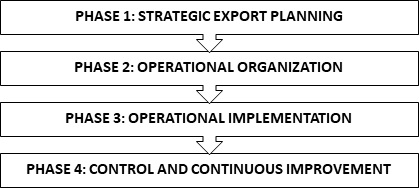
Figure 1. Phases of the process for managing the export of goods and services
Source: Own elaboration
Phase 1: Strategic export planning (steps: diagnosis of export capacity, market research and selection, product adaptation and marketing mix, resource planning, and organizational structure).
Phase 2: Operational organization (organizational structure, supply chain organization, international logistics organization, channel organization, and promotion).
Phase 3: Operational implementation (shipment execution, financial management and collections, after-sales service).
Phase 4: Control and continuous improvement (monitoring of results, system audit, continuous improvement).
This representation corresponds to the process being managed, while the procedure constitutes the operational method by which that process will be managed.
The procedure for implementing the export management process comprises 13 steps to be followed in each phase of the process; it specifically addresses the critical weaknesses identified: confusing structure, training gaps, slow response times, unsustainable profitability, and isolation between production and the customer.
Figure 2 illustrates the relationship between the stages of the export management process (the "what") and the steps of the procedure for managing it (the "how").

Figure 2. Integrated management of the export process
Source: Own elaboration
The procedure incorporates tools such as market prioritization matrices, standardized documentation templates, complaint-handling protocols with a response time of less than 48 hours, and a feedback loop2 system that connects customer complaints with the production department on a monthly basis.
Results of its implementation
The application of the procedure during 2025 transformed export performance indicators (Table 2). The physical volume exported grew from 29.9 metric tons to 65 metric tons (+117%), and the export value from 38,290 USD to 2.8 million USD (projected). The net export margin rose from 8% (unsustainable) to 14.5%, approaching the 15% target, confirming that process standardization and commercial autonomy enable the internalization of efficiencies. This result exceeds the average margin of 10-12% reported by Curzi et al. (2023) for European canned food SMEs in their first year of direct exporting.
The response time to customer inquiries was drastically reduced from 5-7 days to 36 hours, meeting the standard required by European importers (less than 48 hours). The NPS (Net Promoter Score) rose from +19.9 to +35, placing La Conchita with in the "excellent" range according to Reichheld's (2003) classification. The customer repurchase rate rose from 20% (sporadic exports) to 68%, demonstrating the consolidation of long-term business relationships. Documentation errors were reduced from 15% to 2%, thanks to the standardization of templates and staff training.
Table 2 shows the evolution of key export performance indicators.
Table 2. Evolution of key export performance indicators (2024-2025)
Indicator |
2024 (pre-procedure) |
2025 (post-implementation) |
Change |
Export Volume (metric tons) |
29.9 |
65 (projected) |
+117% |
Export value (thousands of USD) |
38.3 |
2,800 (projected) |
+7,210% |
Net export margin |
8% |
14.5% |
+6.5 percentage points |
Response time to inquiries |
5-7 days |
36 hours |
-70% |
Customer NPS |
+19.9 |
+35 |
+15.1 percentage points |
Customer repurchase Rate |
20% |
68% |
+48 percentage points |
Documentation errors |
15% |
2% |
-13 percentage points |
Workers trained in exports |
28% |
76% |
+48 percentage points |
Recognition of export leadership |
38% |
85% |
+47 percentage points |
Source: Internal records of ECV La Conchita and satisfaction surveys
The creation of an autonomous Export Division resolved the conflict of priorities with the Logistics Business Unit, and staff recognition of export leadership increased from 38% to 85%. The training program reached 76% of employees (vs. 28% previously), with 40+ hours per year per person covering European Union and FDA3 regulations, complaint handling, and English language skills. These results validate the argument that internal assessment and documented management activate latent strengths.
The results obtained overcome the limitations of the technologies analyzed in the literature (Jacks et al., 2011; Johanson & Vahlne, 1977; Magnusson et al., 2011; Root, 1994), which, while providing theoretical insights, do not offer operational guidance directly applicable to the context of Cuban state-owned canning companies. The proposed procedure integrates the export process with the sector's regulatory (Ministry of Foreign Trade and Foreign Investment, 2022), seasonal (Fernández del Busto et al., 2021), and organizational characteristics.
The improvement in the net margin (from 8% to 14.5%) confirms that internationalization cannot be a "market-subsidized experiment" (Escandón et al., 2013) but rather a strategic activity that requires financial planning and economies of scale. The reduction in response time and the improvement in NPS demonstrate that the production-customer connection is a critical factor for international competitiveness, moving beyond the reactive approach identified by Barrios Cruz and Torres Paez (2019).
However, limitations remain. The 14.5% margin is still below the 22% of the domestic market, and the company has not yet obtained BRC4 and IFS5 certifications (a requirement for major European retailers). Furthermore, the implementation of the ERP6 export module (a $45,000 investment scheduled for 2026) is necessary to digitize traceability and reduce reliance on manual records. Future research should explore adapting the procedure to other Cuban agro-industrial sectors (citrus, meat) and evaluate its medium-term impact (3-5 years) on export sustainability.
An analysis of theoretical and methodological frameworks related to internationalization and the management of exports of goods and services in vegetable canning companies revealed that none of the technologies reviewed offers guidance directly applicable to the context of Cuban state-owned canning companies, thereby justifying the design of a specific procedure that integrates the export process with the sector's regulatory, seasonal, and organizational particularities.
The characterization of the internationalization process at ECV La Conchita revealed an "immature exporter paradox": high export intensity (direct license, certifications, presence in 14 markets), but low competitive capacity (8% margin vs. 22% national average, organizational confusion, 72% of staff untrained), constituting a "reactive export" model subsidized by the domestic market.
The documented procedure for managing the export process of goods and services -structured into four phases (strategic planning, operational organization, executive implementation, control, and continuous improvement) and 13 steps- overcomes the dichotomy between ministerial regulations (Ministry of Foreign Trade and Foreign Investment, 2022) and business operations by translating general guidelines into actionable instructions with defined responsibilities, control indicators, and management tools adapted to the company's actual resource constraints.
Practical validation of the procedure at ECV La Conchita demonstrated that commercial autonomy, systematic training (from 28% to 76% of staff), the digitization of traceability, and a strategic focus on profitable markets transform the internationalization process, improving the net margin from 8% to 14.5%, the NPS from +19.9 to +35, and the repurchase rate from 20% to 68%, confirming the argument that internal diagnosis and documented management unlock latent strengths for exporting.
REFERENCES
Águila, A. A., & Díaz Macías, R. C. (2020). Las estrategias de exportaciones en Cuba, un procedimiento para su implementación en Cementos Cienfuegos S. A. Universidad y Sociedad, 12(6), 292-302. https://rus.ucf.edu.cu/index.php/rus/article/view/1847
Barrios Cruz, Y., & Torres Paez, C. C. (2019). Internacionalización del sistema empresarial en función del desarrollo local en la provincia Pinar del Río. Cooperativismo y Desarrollo, 7(3), 366-376. https://coodes.upr.edu.cu/index.php/coodes/article/view/256
Chiavenato, I. (2002). Administración: Teoría, proceso y práctica (3.a ed.). McGraw-Hill. https://books.google.com.cu/books?id=iyc3PQAACAAJ
Curzi, D., Materia, V. C., & Vaquero Piñeiro, C. (2023). Innovation as a resilience strategy to economic crises for international food and drink firms. Agribusiness, 39(2), 303-321. https://doi.org/10.1002/agr.21777
Escandón, D., Hurtado Ayala, A., & Castillo Caicedo, M. (2013). Influencia de las barreras a la exportación sobre el compromiso exportador y su incidencia en los resultados internacionales. Revista Escuela de Administración de Negocios, (75), 38-55. https://doi.org/10.21158/01208160.n75.2013.770
Fernández del Busto, Y., García León, L., Suárez Quiñones, A., Vega Pineda, N., Betancourt Vázquez, A. P., & Valdés González, A. (2021). Método para el análisis del comportamiento de la estacionalidad de los precios en las series históricas de importación y exportación. Revista Cubana de Administración Pública y Empresarial, 5(1), e161. https://apye.esceg.cu/index.php/apye/article/view/161
Fletcher Calipolitti, N., De León Jaén, O., & Saavedra Núñez, R. (2025). Estrategias de marketing internacional para la expansión global de empresas exportadoras. Revista Ciencia y Reflexión, 4(1), 1355-1379. https://cienciayreflexion.org/index.php/Revista/article/view/188
Gallardo Figueroa, S. P., Hernández Fernández, L., Beltrán Diaz, A., & Espitia González, S. M. (2024). Trazando el Camino hacia la Internacionalización Empresarial. Revista Venezolana de Gerencia, 29(108), 1758-1775. https://doi.org/10.52080/rvgluz.29.108.18
Ganoza Alemán, J. C. (2026). Análisis de la cultura exportadora en empresas peruanas: Un estudio transversal basado en sus dimensiones estratégicas y organizacionales. Ciencia Latina Revista Científica Multidisciplinar, 10(1), 7258-7288. https://doi.org/10.37811/cl_rcm.v10i1.22821
Heredia Pérez, J. A., Geldes, C., Kunc, M. H., & Flores, A. (2023). The effect of local institutions on the competitive strategies of exporters. The case of emerging economies in Latin America. Journal of Business Research, 169, 114256. https://doi.org/10.1016/j.jbusres.2023.114256
Jacks, D. S., Meissner, C. M., & Novy, D. (2011). Trade booms, trade busts, and trade costs. Journal of International Economics, 83(2), 185-201. https://doi.org/10.1016/j.jinteco.2010.10.008
Johanson, J., & Vahlne, J.-E. (1977). The Internationalization Process of the Firm-A Model of Knowledge Development and Increasing Foreign Market Commitments. Journal of International Business Studies, 8(1), 23-32. https://doi.org/10.1057/palgrave.jibs.8490676
Jorge Martín, R. (2022). Internacionalización y supervivencia exportadora. Un estado de la cuestión. Anuario Jurídico y Económico Escurialense, (55), 245-268. https://doi.org/10.54571/ajee.521
Magnusson, P., Westjohn, S. A., & Zdravkovic, S. (2011). "What? I thought Samsung was Japanese": accurate or not, perceived country of origin matters. International Marketing Review, 28(5), 454-472. https://doi.org/10.1108/02651331111167589
Malca, O., Bolaños, J. P., Rubio Donet, J. L., & Acedo, F. (2023). Export market orientation and export performance in emerging markets: Insights from the Peruvian agri-export sector. Journal of Agribusiness in Developing and Emerging Economies, 13(1), 70-89. https://doi.org/10.1108/JADEE-12-2020-0308
Ministerio del Comercio Exterior y la Inversión Extranjera. (2022). Resolución 220. Aprueba la Metodología General para realizar las Operaciones de Comercio Exterior de Mercancías. Gaceta Oficial de la República de Cuba, Edición Ordinaria No. 63. https://www.gacetaoficial.gob.cu/es/resolucion-220-de-2022-de-ministerio-del-comercio-exterior-y-la-inversion-extranjera
Moonshot AI. (2026). Kimi [Modelo de lenguaje de gran tamaño] (Versión K3) [Software]. https://www.moonshot.ai/
Reichheld, F. F. (2003). The One Number You Need to Grow. Harvard Business Review. https://hbr.org/2003/12/the-one-number-you-need-to-grow
Root, F. R. (1994). Entry Strategies for International Markets. Maxwell Macmillan International.
Sixto Rodríguez, D., & de la Nuez Hernández, D. (2023). Diseño e implementación de un sistema integrado de gestión para empresas pecuarias. Cooperativismo y Desarrollo, 11(2), e626. https://coodes.upr.edu.cu/index.php/coodes/article/view/626
Notes
1 The acronym NPS stands for Net Promoter Score. It is a metric created by Bain & Company to measure customer loyalty. It is based on a single question: “How likely are you to recommend [company/product] to a friend or colleague?”, on a scale from 0 to 10.
2 A feedback loop is a process in which the results of an action influence the original action, creating a continuous cycle of cause and effect.
3 FDA stands for Food and Drug Administration. Context for La Conchita and exports: The FDA is the U.S. regulatory agency that sets food safety standards and contaminant limits that all food imported into the U.S. must meet. Although Cuba does not export on a large scale to the U.S. due to the embargo, the FDA is the international benchmark for quality standards. When La Conchita says “consistent MP quality for export,” it implies that its products meet the most stringent limits of the global market, where the FDA is the de facto standard.
4 In the context of food and exports (particularly relevant for La Conchita), BRC stands for British Retail Consortium. It is a food safety certification developed by the British supermarket consortium, now managed by BRCGS (BRC Global Standards). For La Conchita, BRC is synonymous with access to the European market.
5 In the context of food and exports (complementary to BRC), IFS stands for International Featured Standards. It is a food safety certification of German-French origin, widely required by European retailers. For La Conchita, this means that many exporters obtain both certifications to cover all of Europe. If a customer asks for “BRC or IFS,” it means they will accept either one.
6 An ERP (Enterprise Resource Planning) module is a software component specialized in a specific business function, such as finance or sales. The essence of an ERP system lies in its modular nature, which connects all these modules to a shared central database.
Conflict of interest
Authors declare that they have no conflicts of interest.
Authors' contribution
Yanitza Pereda Aguado: study conception and design, data collection, analysis, and interpretation, and drafting of the manuscript.
Diana de la Nuez Hernández: advisory role, literature review, methodology, review of revisions, and approval of the final version for publication.
Carlos Cesar Torres Paez: critical review of the article with significant contributions to its intellectual content.
All the authors reviewed the writing of the manuscript and approve the version finally submitted.
