 0009-0000-1562-1748
  secre.gral@lacteopr.alinet.cu
Tania Vargas Fernández2
0000-0003-4285-682X tvargas@upr.edu.cuNatacha Reyes Oliva2
0009-0003-5318-9054 reyesnatacha047@gmail.com

Cooperativismo y Desarrollo, September-December 2026; 14(3), e979
Translated from the original in Spanish
Original article
Methodology for managing the work environment in dairy and confectionery companies
Metodología para la gestión del clima laboral en empresas de productos lácteos y confiterías
Metodologia para gestão do ambiente de trabalho em empresas de laticínios e confeitaria
Caridad Barroso Campos1 0009-0000-1562-1748 secre.gral@lacteopr.alinet.cu
Tania Vargas Fernández2 0000-0003-4285-682X tvargas@upr.edu.cu
Natacha Reyes Oliva2 0009-0003-5318-9054 reyesnatacha047@gmail.com
1 Dairy and Confectionery Company of Pinar del Río. Cuba.
2 University of Pinar del Río "Hermanos Saíz Montes de Oca". Cuba.
Received: 08/04/2026
Accepted: 7/07/2026
ABSTRACT
Managing the work environment is a priority challenge for food production companies, given its impact on productivity, quality, and talent retention. The Dairy and Confectionery Company of Pinar del Río has exhibited critical shortcomings: weak leadership in middle management, one-way vertical communication, a lack of systematic feedback mechanisms, and insufficient institutional prioritization of the work environment. The objective of this study was to design a methodology for managing the work environment that would contribute to the effective achievement of organizational objectives. Theoretical and empirical methods as, document analysis, surveys, interviews, the Vester Matrix to identify critical problems, and the Iadov technique for user validation were employed. The proposed methodology comprises five interrelated phases (Awareness, Diagnosis, Analysis and Interpretation, Implementation, and Evaluation-Monitoring-Adjustment) with 21 methodological steps and six lines of intervention: Leadership, Communication, Organizational Structure, Human Talent Development, Recognition and Motivation, and Working Conditions. The validation yielded an overall satisfaction index of 0.679 (Satisfactory), with 100% logical consistency and a high willingness to implement. The research transforms the work environment from an intangible and reactive issue into a systematized, measurable, participatory, and strategically aligned organizational process. It constitutes a replicable tool for the Cuban state sector, institutionalizing the care of human capital as a sustainable competitive advantage.
Keywords: work environment; methodology; management.
RESUMEN
La gestión del clima laboral constituye un desafío prioritario para las empresas productoras de alimentos, dado su impacto en la productividad, calidad y retención de talento. La Empresa de Productos Lácteos y Confiterías de Pinar del Río ha presentado insuficiencias críticas: liderazgo débil en mandos intermedios, comunicación vertical unidireccional, ausencia de mecanismos sistemáticos de retroalimentación y falta de priorización institucional del clima laboral. El objetivo del presente trabajo fue diseñar una metodología para la gestión del clima laboral que contribuyera al cumplimiento eficaz de los objetivos organizacionales. Se emplearon métodos teórico y empíricos como, análisis documental, encuesta, entrevistas, Matriz de Vester para identificar problemas críticos, y técnica de Iadov para validación por criterio de usuarios. La metodología propuesta comprende cinco fases interrelacionadas (Sensibilización, Diagnóstico, Análisis e Interpretación, Implementación y Evaluación-Seguimiento-Ajuste) con 21 pasos metodológicos y seis líneas de intervención: Liderazgo, Comunicación, Estructura Organizacional, Desarrollo del Talento Humano, Reconocimiento y Motivación, y Condiciones de Trabajo. La validación arrojó un índice de satisfacción global de 0.679 (Satisfactorio), con 100% de consistencia lógica y alta disposición a la implementación. La investigación transforma el clima laboral de tema intangible y reactivo en proceso organizacional sistematizado, medible, participativo y estratégicamente alineado. Constituye una herramienta replicable para el sector estatal cubano que institucionaliza el cuidado del capital humano como ventaja competitiva sostenible.
Palabras clave: clima laboral; metodología; gestión.
RESUMO
Gerenciar o ambiente de trabalho é um desafio prioritário para empresas de produção de alimentos, dado seu impacto na produtividade, qualidade e retenção de talentos. A Empresa de Laticínios e Confeitaria de Pinar del Río apresentou deficiências críticas: liderança fraca na gestão intermediária, comunicação vertical unilateral, falta de mecanismos sistemáticos de feedback e priorização institucional insuficiente do ambiente de trabalho. O objetivo deste estudo foi desenvolver uma metodologia para gerenciar o ambiente de trabalho que contribua para o alcance efetivo dos objetivos organizacionais. Métodos teóricos e empíricos foram empregados, incluindo análise documental, questionários, entrevistas, a Matriz de Vester para identificar problemas críticos e a técnica de Iadov para validação com usuários. A metodologia proposta compreende cinco fases inter-relacionadas (Conscientização, Diagnóstico, Análise e Interpretação, Implementação e Avaliação-Monitoramento-Ajuste) com 21 etapas metodológicas e seis linhas de intervenção: Liderança, Comunicação, Estrutura Organizacional, Desenvolvimento de Talentos Humanos, Reconhecimento e Motivação e Condições de Trabalho. A validação resultou em um índice de satisfação geral de 0,679 (Satisfatório), com 100% de consistência lógica e alta disposição para implementação. A pesquisa transforma o ambiente de trabalho, de uma questão intangível e reativa, em um processo organizacional sistematizado, mensurável, participativo e estrategicamente alinhado. Constitui uma ferramenta replicável para o setor público cubano, institucionalizando o cuidado com o capital humano como uma vantagem competitiva sustentável.
Palavras-chave: ambiente de trabalho; metodologia; gestão.
INTRODUCTION
Work environment or organizational environment, understood as the set of shared perceptions that employees have about the policies, practices, and procedures of their work environment, has been addressed from multiple theoretical perspectives that demonstrate its multidimensional nature and its impact on organizational outcomes. Authors such as Litwin and Stringer (1968), pioneers in the systematic study of organizational environment, established that it constitutes a mediating variable between the organizational system and employee motivation, directly influencing their behavior and performance. This concept was later enriched by Schneider and Reichers (1983), who emphasized that organizational environment is always "for something specific," highlighting that employees' subjective perceptions of objective factors are what really determine work behavior.
From the perspective of organizational behavior, Weziak Bialowolska et al. (2023) have indicated in their longitudinal study that the environment of psychological care at work is significantly associated with lower probabilities of diagnosed depression, increased general well-being and greater productivity, showing how perceptions of the work environment directly impact the mental health and performance of employees.
These findings align with the research of Acabado Romana and Guillen Gestoso (2025), who demonstrated in the Portuguese context that organizational environment directly affects employee engagement and, consequently, turnover intention, highlighting the need to improve communication and leadership to strengthen job commitment. Kaviya and Balakrishnan (2025) complement this view by confirming through correlational analysis that there is a significant relationship between organizational environment and job performance in organizational employees, reinforcing the importance of perceptions of the work environment as determinants of organizational behavior.
The importance of managing the work environment in food production companies takes on particular significance given the labor-intensive nature of this sector, the stringency of food quality and safety standards, and the need for precise coordination between production processes. As Gilardi and Lazazzara (2025) point out in their study on the organizational environment for temporaryness, the shared perceptions of employees about the practices, procedures, and behaviors valued when temporary forms are adopted in permanent organizations critically influence the well-being and performance of workers.
In this sense, Adinew (2024) illustrates how variations in organizational environment impact productivity and, indirectly, commitment in the workplace, it is noted that private institutions adopt motivational strategies and performance-oriented cultures that generate more inclusive climates compared to the public sector. Rimbayana et al. (2022) demonstrate that organizational environment is related to individuals' feelings of well-being, job satisfaction, friendly relationships at work, professional commitment, and sense of security, confirming that when the organizational environment changes, the employee's state of well-being also changes.
However, managing the work environment in specific contexts faces unique challenges that demand contextualized methodological approaches. Research by Hubert et al. (2022) on organizational environment for the prevention of infectious diseases during the COVID-19 pandemic demonstrated that a positive organizational environment fosters adherence to health protocols both at work and in employees' private lives, highlighting the pivotal role of organizations in mitigating health crises. Saxton et al. (2021) and Fein et al. (2023) complement these findings by noting that the ethical conduct of managers and employees is critical for achieving social prestige and customer loyalty, establishing organizational climates that prioritize the long-term interests of customers over immediate corporate benefits.
These studies highlight that previous technologies have significant limitations: a predominantly static approach, absence of process management indicators, lack of flexibility for environments requiring rapid changes, and weak mechanisms for evaluating the impact of interventions.
In Cuba, a series of measures have been adopted to strengthen the Socialist State Sector, from which Cuban companies have benefited and had the opportunity to manage and grow economically. This process is accompanied by business improvement. Organizational leaders are showing a growing interest in understanding the effects that both organizational structure and processes have on their personnel, given that these fundamentally affect individual behavior.
Dairy and Confectionery Company of Pinar del Río "Fornell Delgado" has achieved positive results, operating under a state-socialist model and demonstrating efficiency in fulfilling its mission and social purpose. This performance shows that the organization has managed its resources and processes effectively to generate value and achieve its goals, thus contributing to the economic and social objectives of the State.
However, the company is currently facing problems related to its work environment and the assignment of roles and responsibilities. This situation is exacerbated by inadequate management in several of its processes. Much of the knowledge applied to manage the company and the resources used are based on experience, leading to a lack of professionalism and effectiveness in decision-making. This unstructured approach can have a direct and negative impact on the overall development of the organization.
Through a preliminary diagnosis involving interviews with key personnel within the organization, the following findings were identified: an absence of effective communication flow, leading to misunderstandings and hindering interdepartmental collaboration; the organization lacks a clear structure defining roles and responsibilities, contributing to confusion and inefficiency in daily work; the departmental organization does not foster the synergy or coordination necessary to achieve the company's strategic objectives; a lack of cohesion and collaboration among team members limits the company's ability to innovate and adapt to market changes; weak leadership at the middle management level, as they lack adequate training in leadership skills such as communication, motivation, and teamwork; a lack of appropriate mechanisms to monitor progress and process compliance limits the ability to make necessary adjustments; and staff turnover due to retirement, departures from the country, and reorientation to the private sector has impacted the organization's ability to meet its objectives. Low levels of staff motivation, due to a lack of resources or outdated tools that hinder performance and demotivate; among other things.
Such limitations have tended to affect the achievement of organizational goals in recent years and are crucial to understanding the areas that require urgent attention to improve the overall performance of the organization.
In this sense, the objective of this article is to design a methodology for the management of the work environment that contributes to the effective fulfillment of its organizational objectives.
MATERIALS AND METHODS
The dialectical materialist method was employed as the general method of scientific research to assess the evolution of research in the field of workplace environment management. The abstraction procedure was used for the analysis and decomposition of the object of study, as well as induction-deduction to determine generalities and regularities of the process. Likewise, these procedures were used in the development and validation of the proposed solution.
At the theoretical level, the historical and logical methods were used to determine trends in workplace environment management, based on technologies that precede the proposal in this research. The structural-systemic method was also used to provide a foundation for the methodology for workplace environment management. The procedures employed were analysis and synthesis to break down the object's functioning into its various components and establish the relationships between them.
As an empirical level method, the measurement method was used to process the information obtained in the applied questionnaires, using SPSS version 21, as database processing software.
Among the techniques applied, the following stand out:
RESULTS AND DISCUSSION
There is consensus among various authors regarding the elements associated with the work environment, which can be classified from both internal and external perspectives. Among the most relevant internal factors is leadership capacity, which facilitates the identification of critical aspects requiring improvement and promotes the organization's rapid adaptation to changing circumstances. Likewise, the organizational structure, encompassing hierarchical relationships and the coordination of activities to achieve organizational goals, enhances the skills and abilities of the staff. Organizational culture also plays a fundamental role in guiding appropriate employee behavior and ensuring the proper execution of tasks.
Regarding external factors, the family environment stands out, which directly impacts the behavior of the staff, and business relationships, since the association with organizations that maintain high expectations motivates employees to perform efficiently and effectively (Ríos López et al., 2023).
The study of technologies on work environment, by authors such as Cooperrider and Srivastva (1987), Burke (2010), Papalexandris (2025), Auqui Armijos and Molina Cevallos (2026); has allowed assess the evolution of the research in the field of management of this process. A coincidence is observed in several phases of the process, which include: awareness, measurement and evaluation and analysis of the work environment.
The most relevant limitations identified, which served as the basis for the proposed methodology of this work, are the following: there is an approach that focuses more on the measurement and evaluation of the organizational environment, without taking into account aspects related to the management of this process; indicators are not established to evaluate the management of the work environment in the entity; lack of flexibility and absence of clear mechanisms to measure the impact of the interventions, which can hinder continuous improvement.
The empirical diagnosis conducted at the Dairy and Confectionery Company in Pinar del Río revealed, through consultation of primary and secondary sources of information, limitations in the management of the work environment. These limitations are primarily characterized by: middle managers with limited management training; deficient vertical communication; a lack of realistic and achievable work objectives; and middle managers' lack of awareness of their employees' professional aspirations and potential development paths, among other issues. The central problem identified using the Vester Matrix is the company's deficient management of the work environment.
Taking these elements into account, a methodology for managing the work environment was designed with the aim of contributing to the improvement of the work environment at the Dairy Products and Confectionery Company of Pinar del Río.
This methodology is based on a set of principles that support its conception from a scientific and practical point of view, these being the following: integrality and contextualization, continuous improvement, participation and protagonism of the workers, confidentiality and anonymity, transparency and feedback, learning, and flexibility.
Based on the definition of the principles that support the theoretical conception of the methodology, the following are determined as the main premises for its implementation: commitment and exemplary conduct of management, alignment with the company's global strategy, and allocation of resources.
The proposed methodology consists of five interrelated phases, organized in a continuous improvement cycle, as shown in Figure 1.
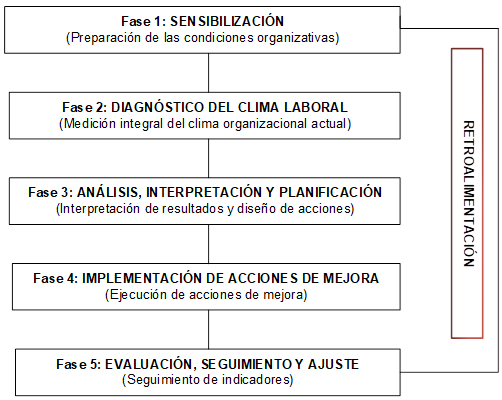
Figure 1. Methodology for managing the work environment at the Dairy and
Confectionery Company of Pinar del Río
Source: Own elaboration
An explanation of the phases and steps of the methodology, with its objectives, implementation actions, duration and techniques, is shown below.
Phase 1: Awareness
Objective: To create the organizational conditions for prioritizing the management of the work environment.
Step 1: Organizational readiness diagnosis
Objective: To assess organizational maturity in order to initiate the process of managing the work environment.
Duration: 1 week.
Implementation actions:
Techniques: Document analysis, interview, group work.
Step 2: Socialization with the Board of Directors
Objective: To generate consensus and formal commitment from senior management.
Duration: 1 week.
Implementation actions:
Techniques: Focus group, document analysis, group work.
Step 3: Establishment of the Work Climate Committee
Objective: To create a body for the management and coordination of the process.
Duration: 2 weeks.
Implementation actions:
Techniques: Document analysis, group work.
Step 4: Institutional communication of the start of the process
Objective: To inform all workers about the purpose, scope, and benefits of the methodology.
Duration: 2 weeks.
Implementation actions:
Techniques: Focus group, document analysis, group work.
Phase 2: Diagnosis of the work environment
Objective: To obtain objective information on the current state of the work environment in its three dimensions.
Step 5: Design of the measuring instrument
Objective: To build a validated and reliable survey to measure the work environment.
Duration: 2 weeks.
Implementation actions:
Techniques: Document analysis, group work, list reduction, statistical techniques.
Step 6: Sample Determination
Objective: To define statistical representativeness of the population.
Duration: 1 week (parallel to step 5).
Implementation actions:
Techniques: Group work, statistical techniques.
Step 7: Applying the survey
Objective: To collect perceptual information from the selected sample.
Duration: 3 weeks.
Implementation actions:
Techniques: Group work, statistical techniques.
Step 8: Application of complementary qualitative techniques
Objective: To delve deeper into meanings and contexts not capturable by survey.
Duration: 3 weeks (parallel to step 7).
Implementation actions:
Techniques: Document analysis, focus group, participant observation, interview.
Step 9: Information Processing and Analysis
Objective: To transform raw data into useful information for decision making.
Duration: 3 weeks.
Implementation actions:
Techniques: Group work, statistical techniques.
Phase 3: Analysis, interpretation and planning
Objective: To analyze the information collected as a basis for planning actions to improve the work environment.
Step 10: Interpretation of results
Objective: To understand the meaning of the findings for the organization.
Duration: 2 weeks.
Implementation actions:
Techniques: Document analysis, group work.
Step 11: Construction of the Vester Matrix
Objective: To identify critical, active, passive, and indifferent problems.
Duration: 2 weeks.
Implementation actions:
Techniques: Vester matrix, document analysis, group work.
Step 12: Designing the action plan
Objective: To define specific interventions, responsible parties, resources, and deadlines.
Duration: 4 weeks.
Implementation actions:
Techniques: Gantt chart, document analysis, group work, Logical Framework Matrix.
Phase 4: Implementation of improvement actions
Objective: Implement improvement actions by lines of intervention, based on the critical problems identified in the diagnosis.
Step 13: Leadership Intervention (Line 1)
Objective: To strengthen the managerial capabilities of middle managers.
Duration: 12 months (continuous).
Implementation actions:
Techniques: Document analysis, group work, 360° evaluation.
Step 14: Communication Intervention (Line 2)
Objective: To transform one-way vertical communication into participatory two-way communication.
Duration: 9 months.
Implementation actions:
Techniques: Document analysis, group work.
Step 15: Intervention in Organizational Structure (Line 3)
Objective: To clarify roles, simplify processes, and document responsibilities.
Duration: 12 months.
Implementation actions:
Techniques: Group work, interview, process mapping.
Step 16: Intervention in Human Talent Development (Line 4)
Objective: To create visible and achievable career paths.
Duration: 12 months.
Implementation actions:
Techniques: Group work, interview.
Step 17: Intervention in Recognition and Motivation (Line 5)
Objective: To systematize recognition beyond salary.
Duration: 12 months.
Implementation actions:
Techniques: Document analysis, group work, interview.
Step 18: Intervention in Working Conditions (Line 6)
Objective: To improve physical infrastructure and general well-being.
Duration: 12 months.
Implementation actions:
Techniques: Document analysis, group work, interview.
Phase 5: Evaluation, monitoring and adjustment
Objective: Evaluate the implementation of the improvement actions planned in the entity.
Step 19: Monitoring management indicators
Objective: To monitor the behavior of key variables in real time.
Duration: Monthly/Quarterly.
Implementation actions:
Techniques: Document analysis, group work.
Step 20: Annual measurement of the work environment
Objective: To evaluate the impact of interventions and identify new needs.
Duration: Annual.
Implementation actions:
Techniques: Survey, focus group, document analysis.
Step 21: Adjustment and continuous improvement of the action plan
Objective: To adapt the strategy to the results and the changing context.
Duration: Annual.
Implementation actions:
Techniques: Group work, document analysis.
Table 1 contains the success indicators of the proposed methodology, grouped into several levels: process, learning outcomes, behavior and impact; with a foreseeable goal of one year of implementation and three years, which will allow the evaluation of the impact of the proposed methodology on the company under study.
Table 1. Success indicators of the methodology
Level |
Indicator |
1-year goal |
3-year goal |
Process |
Percentage of steps completed according to schedule |
90% |
95% |
% of techniques implemented with quality |
85% |
95% |
|
Learning outcomes |
Percentage of trained middle managers |
100% |
100% |
Satisfaction with training programs (scale 1-5) |
4.0 |
4.5 |
|
Behavioral Results |
Score in Leadership dimension (scale 1-5) |
3.5 |
4.2 |
Score in Communication dimension (scale 1-5) |
3.8 |
4.3 |
|
Percentage of suggestions addressed on time |
90% |
95% |
|
Impact results |
Staff turnover |
≤ 12% |
≤ 8% |
Absenteeism |
≤ 6% |
≤ 4% |
|
Overall job satisfaction (scale 1-5) |
3.8 |
4.2 |
|
Labor productivity |
+5% |
+15% |
Source: Own elaboration
Iadov technique was applied to 30 potential users, distributed in three strata: 10 directors of the Board of Directors, 10 middle managers (heads of UEB, departments and brigades) and 10 operational workers from different areas.
The following are the main results highlighted:
The main suggestions made by the surveyed users are: the need to guarantee specific budgetary resources; to train facilitators beforehand; to incorporate technological tools to streamline processes; to maintain flexibility according to the characteristics of each UEB and to improve communication of the process at all levels.
The designed methodology responds to a practical operationalization of solid theoretical frameworks and the results obtained as part of the empirical diagnosis of the research. Its structure in five phases (Awareness, Diagnosis, Analysis and Interpretation, Implementation, and Evaluation-Monitoring-Adjustment) and 21 methodological steps guarantees a cyclical, measurable, participatory process contextualized to the Cuban food sector.
The proposed methodology transforms the work environment from an intangible and reactive issue, managed informally, into a systematized, measurable, participatory organizational process strategically aligned with business objectives of productivity and quality. It represents the institutionalization of human capital management as a sustainable competitive advantage, integrating six interconnected lines of intervention: Leadership, Communication, Organizational Structure, Human Talent Development, Recognition and Motivation, and Working Conditions.
User validation using the Iadov technique yielded an overall satisfaction index of 0.679, rated as "Satisfactory," with 100% logical consistency in responses and a high willingness to implement (0.692). Managers showed greater satisfaction (0.725) than operational staff (0.638), suggesting the need to adjust the methodology's communication for operational levels. The priorities identified by users (recognition, leadership, working conditions, communication) align with the critical problems identified in the diagnostic assessment, validating the relevance of the proposal.
REFERENCES
Acabado Romana, F., & Guillen Gestoso, C. (2025). Organizational climate and its influence on employee's commitment to companies - a case study in Portugal. International Journal of Innovative Research and Scientific Studies, 8(1), 695-703. https://doi.org/10.53894/ijirss.v8i1.4415
Adinew, Y. (2024). A comparative study on motivational strategies, organizational culture, and climate in public and private institutions. Current Psychology, 43(13), 11470-11492. https://doi.org/10.1007/s12144-023-05259-9
Auqui Armijos, J. E., & Molina Cevallos, D. S. (2026). Clima laboral en una empresa de alimentos ubicada en el sector del Progreso, Guayaquil. RECIAMUC, 10(Especial 1), 237-250. https://reciamuc.com/index.php/RECIAMUC/article/view/1705
Burke, W. W. (2010). Organization Change: Theory and Practice (3.a ed.). SAGE Publications, Inc. https://books.google.com.cu/books?id=v6lL-o4vS1IC
Cooperrider, D. L., & Srivastva, S. (1987). Appreciative Inquiry in Organizational Life. Research in Organizational Change and Development, 1, 129-169. https://www.researchgate.net/publication/265225217_Appreciative_Inquiry_in_Organizational_Life
Fein, E. C., Tziner, A., & Vasiliu, C. (2023). Perceptions of ethical climate and organizational justice as antecedents to employee performance: The mediating role of employees' attributions of leader effectiveness. European Management Journal, 41(1), 114-124. https://doi.org/10.1016/j.emj.2021.11.003
Gilardi, S., & Lazazzara, A. (2025). Organisational climate for temporariness: Exploring employees' shared perceptions within intra-organisational temporary forms. International Journal of Project Management, 43(4), 102720. https://doi.org/10.1016/j.ijproman.2025.102720
Hubert, P., Abdel Hadi, S., Mojzisch, A., & Häusser, J. A. (2022). The effects of organizational climate on adherence to guidelines for COVID-19 prevention. Social Science & Medicine, 292, 114622. https://doi.org/10.1016/j.socscimed.2021.114622
Kaviya, K., & Balakrishnan, N. (2025). The Relationship between Organizational Climate and Job Performance among Organizational Employees. International Journal of Indian Psychology, 13(1), 2114-2122. https://ijip.in/articles/organizational-climate-and-job-performance
Litwin, G. H., & Stringer, R. A. (1968). Motivation and Organizational Climate. Harvard University. https://books.google.com.cu/books?id=FVevAAAAIAAJ
Papalexandris, A. (2025). Unraveling the Relationship Between High Performance Work Systems and Team Performance: The Contingent Role of Competitive Team Climate. Human Resource Management Journal, 35(3), 577-590. https://doi.org/10.1111/1748-8583.12581
Rimbayana, T. A. K., Erari, A., & Aisyah, S. (2022). The Influence of Competence, Cooperation and Organizational Climate on Employee Performance with Work Motivation as a Mediation Variable (Study on the Food and Agriculture Office Clump of Merauke Regency). Technium Social Sciences Journal, 27, 556-578. https://doi.org/10.47577/tssj.v27i1.5200
Ríos López, L. A., Saldaña Pinto, C. A., Alejandría Castro, C. A., & Fasanando Puyo, T. (2023). Factores relacionados con el clima organizacional. Revista Amazónica de Ciencias Económicas, 2(1), e455. https://doi.org/10.51252/race.v2i1.455
Saxton, G. D., Ren, C., & Guo, C. (2021). Responding to Diffused Stakeholders on Social Media: Connective Power and Firm Reactions to CSR-Related Twitter Messages. Journal of Business Ethics, 172(2), 229-252. https://doi.org/10.1007/s10551-020-04472-x
Schneider, B., & Reichers, A. E. (1983). On the etiology of climates. Personnel Psychology, 36(1), 19-39. https://doi.org/10.1111/j.1744-6570.1983.tb00500.x
Weziak Bialowolska, D., Lee, M. T., Cowden, R. G., Bialowolski, P., Chen, Y., VanderWeele, T. J., & McNeely, E. (2023). Psychological caring climate at work, mental health, well-being, and work-related outcomes: Evidence from a longitudinal study and health insurance data. Social Science & Medicine, 323, 115841. https://doi.org/10.1016/j.socscimed.2023.115841
Conflict of interest
Authors declare that they have no conflicts of interest.
Authors' contribution
Caridad Barroso Campos, Tania Vargas Fernández and Natacha Reyes Oliva designed the study, analyzed the data, and prepared the draft.
Caridad Barroso Campos and Natacha Reyes Oliva were involved in data collection, analysis, and interpretation.
All the authors reviewed the writing of the manuscript and approve the version finally submitted.
