 0000-0003-3124-7981
  silvia.pell@rect.uh.cu
Máryuri García González1
0000-0002-2734-6541 maryurigarciagonzalez@gmail.comAnamarys Rojas Murillo2
0000-0002-4340-0608 anamarys.rojas@upr.edu.cu

Cooperativismo y Desarrollo, January-April 2026; 14(1), e955
Translated from the original in Spanish
Original article
Principles of circular design in R&D&I processes within the value chain for sustainability
Principios de diseño circular en procesos de I+D+i en la cadena de valor para la sostenibilidad
Princípios do design circular em processos de P&D&I na cadeia de valor para a sustentabilidade
Silvia Miriam Pell del Rio1 0000-0003-3124-7981 silvia.pell@rect.uh.cu
Máryuri García González1 0000-0002-2734-6541 maryurigarciagonzalez@gmail.com
Anamarys Rojas Murillo2 0000-0002-4340-0608 anamarys.rojas@upr.edu.cu
1 University of Havana. Cuba.
2 University of Pinar del Río "Hermanos Saíz Montes de Oca". Cuba.
Received: 4/12/2025
Accepted: 28/04/2026
ABSTRACT
This article examines how the principles of circular design transform research, development, and innovation processes by prioritizing material reuse, extending product lifecycles, and reducing waste, which is its ultimate goal. It proposes a systemic integration across the value chain that fosters collaboration among industrial, academic, and local stakeholders to close production loops and strengthen community resilience. Product redesign from the outset is highlighted as a key strategy to facilitate disassembly, recycling, and repurposing, while waste management is addressed as an essential component of the circular model, aimed at transforming waste into resources through clean technologies and regenerative economic approaches. The research was based on content analysis, scientific observation, theoretical methods (systemic-structural functional and historical-logical), empirical methods (observation and document analysis), and methodological triangulation, ensuring rigor and relevance in defining criteria.
Keywords: waste management; sustainability; circularity; innovation.
RESUMEN
El artículo se propone analizar cómo los principios del diseño circular transforman los procesos de investigación, desarrollo e innovación al priorizar la reutilización de materiales, la extensión del ciclo de vida de los productos y la reducción del desperdicio, siendo este el objetivo del mismo. Se plantea una integración sistémica en la cadena de valor que promueva la colaboración entre actores industriales, académicos y territoriales, con el fin de cerrar ciclos productivos y fortalecer la resiliencia comunitaria. El rediseño de productos desde su concepción se destaca como estrategia clave para facilitar su desmontaje, reciclaje y revalorización, mientras que la gestión de residuos se aborda como componente esencial del modelo circular, orientada a convertirlos en recursos mediante tecnologías limpias y enfoques de economía regenerativa. La investigación se sustentó en análisis de contenido, observación científica, métodos teóricos (sistémico-estructural funcional e histórico-lógico), métodos empíricos (observación y análisis documental) y triangulación metodológica, garantizando rigor y pertinencia en la definición de criterios.
Palabras claves: gestión de residuos; sostenibilidad; circularidad; innovación.
RESUMO
Este artigo analisa como os princípios do design circular transformam os processos de pesquisa, desenvolvimento e inovação, priorizando a reutilização de materiais, estendendo os ciclos de vida dos produtos e reduzindo o desperdício, que é o próprio objetivo do design circular. Propõe uma integração sistêmica ao longo da cadeia de valor que fomenta a colaboração entre atores industriais, acadêmicos e locais para fechar os ciclos de produção e fortalecer a resiliência da comunidade. O redesenho do produto desde o início é destacado como uma estratégia fundamental para facilitar o desmantelamento, a reciclagem e a reutilização, enquanto a gestão de resíduos é abordada como um componente essencial do modelo circular, visando transformar resíduos em recursos por meio de tecnologias limpas e abordagens econômicas regenerativas. A pesquisa baseou-se em análise de conteúdo, observação científica, métodos teóricos (sistêmico-estrutural-funcional e histórico-lógico), métodos empíricos (observação e análise documental) e triangulação metodológica, garantindo rigor e relevância na definição dos critérios.
Palavras-chave: gestão de resíduos; sustentabilidade; circularidade; inovação.
INTRODUCTION
Solid waste management is a critical challenge that requires the collaboration of multiple stakeholders, including governments, businesses, and communities. Universities hold a key position as institutions that train and manage new professionals who are constantly emerging and developing (García Ortega et al., 2024). It is precisely from their respective contexts that each institution must contribute to a culture of sustainability and development.
This article explores the importance of integrating these actors into efficient waste management, highlighting best practices and the obstacles they face. An analysis of various initiatives at the local and global levels was conducted, demonstrating how inter-institutional cooperation and community participation can significantly improve waste management outcomes. The findings suggest that an inclusive strategy not only optimizes waste management but also promotes environmental sustainability and social well-being.
Solid waste management has become a central issue on urban and environmental agendas worldwide. Inadequate waste management can have serious consequences for public health and the environment. As cities grow, so does waste generation, posing significant challenges to existing management systems. Integrating diverse stakeholders in waste management is crucial to addressing these challenges effectively (Samaniego et al., 2017).
The traditional approach to waste management has been predominantly technical and government-centered, leading to a lack of participation and commitment from other relevant stakeholders. Recent studies highlight the importance of a collaborative approach that includes communities, businesses, and non-governmental organizations (NGOs) to improve waste management outcomes.
Luna Sandoval (cited in López Suárez, 2025), points out that the functioning of the circular economy requires a four-helix mechanism: government, academia, businesses and citizens, highlighting the active participation of civil society as an indispensable condition, where the active participation of citizens not only improves the effectiveness of recycling, but also fosters greater environmental awareness.
Furthermore, the literature suggests that networking among different actors can facilitate the exchange of knowledge and resources, resulting in more innovative and sustainable solutions, considering, among other alternatives, the circular economy.
Therefore, a systemic integration is intended to foster collaboration among industrial, academic, and territorial stakeholders to close production cycles, starting from the value chain, supported by stakeholder analysis, solid waste management, and the optimization of existing processes, which contribute to more sustainable development, this approach strengthens research, development, and innovation (R&D&I) processes through the reuse of materials and the extension of product lifecycles.
Therefore, the objective would be to analyze how the principles of circular design transform research, development and innovation processes by prioritizing the reuse of materials, extending the life cycle of products and reducing waste.
MATERIALS AND METHODS
The study employed a qualitative approach based on case analysis, applied in three representative municipalities in Havana province that have implemented stakeholder integration strategies in waste management. These municipalities were selected based on criteria of territorial relevance and national representativeness, allowing for the observation of diverse and comparable experiences. Data collection involved semi-structured interviews with municipal officials, representatives of non-governmental organizations, and community leaders, supplemented by a review of official documents, technical reports, and local regulations.
The procedure included triangulation of sources, contrasting testimonies with documentary evidence, and applying a comparative analysis among the observed initiatives. From a theoretical perspective, methods such as the historical-logical approach were used to contextualize the evolution of waste management practices, and the systemic-structural-functional approach to understand the articulation of actors in the value chain. Empirically, scientific observation and documentary analysis were applied, allowing for the integration of institutional and community perspectives. This methodological design sought to consolidate a culture of sustainable and resilient innovation, aligned with territorial development objectives, through the coherent articulation of theoretical and empirical techniques.
RESULTS AND DISCUSSION
In the Cuban context, characterized by a strong community vocation and centralized public management, the qualitative study on the integration of actors in waste management reveals the importance of coordinating efforts between state institutions, social organizations and local leaders to consolidate a culture of sustainable innovation; through the analysis of three representative municipalities (Guanabacoa, La Lisa and Centro Habana), all in the province of Havana, experiences were identified that demonstrate how the active participation of the community, together with the commitment of officials and NGOs, allows the implementation of resilient strategies aligned with territorial development objectives.
The use of semi-structured interviews and document review allowed for a comparison of theoretical approaches -such as the circular economy and collaborative governance- with empirical practices that reflect local adaptive capacity in the face of environmental and social challenges. In Cuba, where resources are limited but human capital is strong, this type of integration fosters the creation of contextualized, sustainable, and replicable solutions, strengthening the social fabric and promoting more efficient and participatory waste management.
The study showed that incorporating collaborative governance frameworks, a circular economy, and sustainable territorial development has positively transformed waste management in the municipalities analyzed (Guanabacoa, La Lisa, and Centro Habana) by promoting integrated strategies that link local governments, social organizations, state-owned enterprises, and communities in co-creation processes focused on shared environmental responsibility. The inclusion of social capital as a central organizing principle strengthened networks of trust and cooperation, essential for ensuring the continuity and resilience of these initiatives.
From an empirical perspective, concrete experiences were documented that reflect how these principles materialize in community actions, such as the creation of recycling centers, cooperative-led recycling programs, and educational campaigns spearheaded by neighborhood stakeholders. These initiatives helped consolidate sustainable practices and increase citizen participation. The results showed that political will, institutional stability, and trust among stakeholders were decisive factors for the success of the strategies, while resource scarcity, lack of training, and resistance to change were identified as recurring barriers.
In particular, municipalities that successfully aligned their waste management plans with territorial development objectives demonstrated greater capacity for social innovation and resilience in the face of material limitations, achieving significant improvements in recycling rates and community engagement. Overall, the analysis confirms that integrating theoretical and empirical approaches not only strengthens environmental management but also fosters a culture of sustainable and resilient innovation capable of generating lasting impacts on local development.
Through semi-structured interviews, document review, and comparative analysis, the aim is to consolidate a culture of innovation aligned with territorial development objectives.
The comparative analysis by municipality is presented, where the distinctive aspects are evident (Table 1).
Table 1. Comparative analysis between municipalities under study
Municipality |
Featured Initiatives (ID) |
Strengths (S) |
Weaknesses (D) |
Resilience (R) |
Participation (P) |
Sustainability (S) |
Guanabacoa |
Urban agroecology project |
Agricultural tradition, active community participation |
Limited access to technology |
High, based on local adaptation and traditional knowledge |
High |
High |
La Lisa |
Digital platform for community services |
Links with universities and technology centers |
Digital divide in vulnerable sectors |
Media, dependent on connectivity and technical support |
Average |
Average |
Centro Habana |
Recycling and circular economy network |
Organizational networks, community creativity |
Deteriorated physical infrastructure |
High, based on informal networks and social capital |
High |
High |
Source: Own elaboration
In Guanabacoa, the initiatives are characterized by a strong community focus, where neighborhood leaders have played a central role in organizing educational campaigns and creating participatory recycling centers. Trust among local stakeholders has been a decisive factor, although material limitations have required creative solutions to sustain recycling practices.
In La Lisa, the emphasis has been on institutional coordination, with a greater presence of municipal officials and NGOs in program planning and implementation. This institutional continuity has allowed for the consolidation of recycling projects with cooperatives, although challenges remain related to technical training and the resistance of some sectors to changing consumption habits and waste disposal practices.
In Centro Habana, the defining characteristic has been the capacity for resilience in the face of more adverse material conditions. Social innovation has manifested itself in the integration of state-owned enterprises with community organizations to implement low-cost solutions, which has fostered citizen participation and the building of shared responsibility networks. However, resource scarcity and population density pose additional challenges to the sustainability of these initiatives.
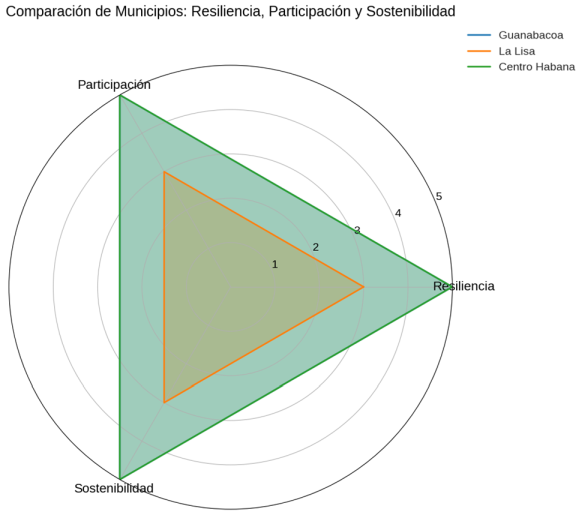
Figure 1. Comparative radar chart between the municipalities studied
Source: Own elaboration
The graph reveals a clear gap between Centro Habana and the other municipalities: while Centro Habana shows comprehensive development, La Lisa remains at a medium level, and Guanabacoa is either absent or has insufficient data. The comparison allows us to identify relative strengths and weaknesses: Centro Habana as a benchmark, La Lisa with potential for improvement, and Guanabacoa as a critical area requiring further investigation.
Overall, the comparative analysis shows that, although the three municipalities share the application of collaborative governance and circular economy frameworks, each has developed strategies with different emphases: Guanabacoa on community mobilization, La Lisa on institutional frameworks, and Centro Habana on innovative resilience. This diversity of approaches demonstrates that sustainable and resilient waste management requires adaptation to the specific conditions of each territory, leveraging its strengths and addressing its limitations.
Frameworks for social innovation, territorial resilience, and collaborative governance were applied, using the Sustainable Development Goals as a cross-cutting reference. Sources such as interviews, documents, and direct observation were triangulated, along with network analysis, to identify innovation hubs in each municipality, revealing that sustainable innovation in Havana manifests itself in diverse ways depending on the territorial context. Guanabacoa stands out for its agroecological approach, La Lisa for digitalization, and Centro Habana for the circular economy. Community participation is a key factor in resilience, and it is necessary to strengthen inter-institutional coordination and the systematization of best practices. This allows for the development of a set of strategic recommendations for each municipality, taking into account the strengths identified in each one.
1. Guanabacoa: Urban agroecology
Objective: To consolidate a territorial agroecological ecosystem.
2. La Lisa: Community digital platform
Objective: To democratize access to services through technology.
3. Centro Habana: Recycling and circular economy network
Objective: To transform waste into resources with a community focus.
To achieve this, an integrated action plan based on collaborative governance could generate greater territorial and inter-municipal cohesion, increased citizen participation, reduced technological and environmental gaps, and the consolidation of a culture of adaptive resilience, with a system of shared indicators aligned with the sustainable development goals, giving significant importance to training, from innovation and resilience training programs.
Sustainable innovation is expressed in diverse ways depending on the territorial context, and community participation is key to resilience. It is necessary to strengthen inter-institutional coordination, systematize good practices, and understand the culture of innovation as a social process, not just a technological one.
This analysis suggests that, in the Cuban context, the integration of theoretical approaches with participatory practices can strengthen the culture of sustainability and generate replicable models in other territories of the country.
Managing for the development of the circular economy involves transforming traditional production models into sustainable, regenerative, and collaborative systems, integrating innovation, public policies, and corporate responsibility.
The circular economy is presented as a strategic alternative to the linear model of production and consumption, promoting reuse, recycling, and waste reduction. Effective management in this context requires planning that brings together public and private stakeholders, fosters technological innovation, and ensures environmental sustainability. According to Allende Zottele and Nájera Jiménez (2022), this approach directly contributes to the Sustainable Development Goals of the 2030 Agenda by encouraging responsible and resilient practices in economic systems.
Furthermore, Barbieri da Rosa et al. (2023) highlight that the circular economy not only improves resource efficiency but also fosters new business opportunities and green jobs. For small and medium-sized enterprises (SMEs), the implementation of circular strategies can be guided by practical frameworks such as those proposed by Arnedo Lasheras et al. (2020), who emphasize the importance of adapting internal processes and strengthening organizational culture. In this sense, managing the development of the circular economy becomes a comprehensive process that requires leadership, environmental, social, governmental, and organizational education, and coherent policies that facilitate the transition to more sustainable and equitable models and decision-making processes.
Sustainable territorial development involves integrating local strategies that promote resource regeneration, community resilience, and environmental innovation. The circular economy applied to territorial development seeks to transform urban and rural systems through the implementation of production models that reduce waste, optimize resource use, and generate social and environmental value. In this context, territorial entities play a key role in designing public policies that integrate environmental management, urban planning, and citizen participation. According to the Economic Commission for Latin America and the Caribbean, circular cities represent a new paradigm that allows for simultaneously addressing the challenges of sustainability, inclusion, and local competitiveness (Astaburuaga et al., 2022).
Among the most relevant alternatives are integrated solid waste management, sustainable production and consumption, water and habitat management, and community environmental education. These actions allow territories to develop their own capacities to address climate change, conserve biodiversity, and foster resilient local economies (Conversápolis, 2023). For example, the implementation of community composting systems, circular markets, and collaborative innovation platforms are initiatives that strengthen the social and economic fabric from a circular perspective.
Furthermore, a territorial circular economy requires robust institutional management capable of coordinating public, private, and social actors, and of adapting regulatory frameworks that facilitate the transition to regenerative models. Strategic planning must consider the specific characteristics of the territory, its natural resources, its productive culture, and its social dynamics in order to design contextualized and scalable solutions.
Managing the development of the circular economy in territories not only improves environmental sustainability, but also promotes social equity and economic innovation, positioning communities as protagonists of their transformation.
Managing the development of a circular economy in Cuba has become a strategic priority within the framework of the transition to a more sustainable development model. In recent years, the country has begun implementing public policies aimed at promoting circularity in key sectors, such as paper and cardboard recycling, with the support of international organizations such as the United Nations Development Programme and the Spanish Agency for International Development Cooperation (Programa de las Naciones Unidas para el Desarrollo, 2023).
This strategy aligns with the need to transform the prevailing linear production model, promoting resource efficiency, waste reduction, and technological innovation. In this sense, the circular economy is conceived as a systemic and multidimensional model that requires innovation management focused on redesigning processes, products, and business models, a point emphasized by researchers such as Imbernó Díaz and Souto Anido (2023), who emphasize the importance of integrating innovation into the strategic planning of Cuban organizations.
Furthermore, specific methodologies have been developed for diagnosing and evaluating circular performance, such as those proposed by Ihobe (2024), which allow for characterizing the level of circularity using key indicators, facilitating decision-making and continuous improvement. Taken together, these advances reflect a growing commitment to the circular economy as a path to achieving more resilient, inclusive, and environmentally responsible economic development.
Lazcano Herrera (2024) analyzes how the transition to a circular economy involves not only technical and organizational transformations, but also a profound cultural shift among the stakeholders. His approach highlights the importance of change management from a human perspective, recognizing that adopting circular practices requires awareness-raising, training, and participatory leadership.
Among the proposed solutions, circular design in R&D&I and the Value Chain is established, from Infrastructure, Strategy and Community Participation, for which the transition to a circular economy is necessary, which requires a profound reconfiguration of the research, development and innovation processes, as well as the dynamics that structure the value chain.
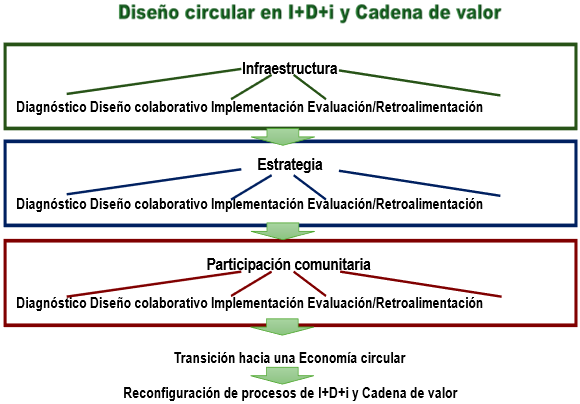
Figure 2. Circular design in R&D&I and value chain from the circular economy
Source: Own elaboration
This graphic illustrates how the pillars of Infrastructure, Strategy, and Community Participation are articulated at each stage of the process toward a circular economy: from the initial diagnosis to evaluation and feedback. It also highlights the interaction between public, private, and community actors, which is key to reconfiguring R&D&I processes and the value chain in the Cuban context.
This transformation involves not only technological changes, but also cultural, organizational, and territorial ones. Therefore, the principles of circular design -durability, repairability, and recyclability- are being modeled through three strategic scenarios: improving existing infrastructure, implementing circular models, and promoting community participation.
1. Improvement of existing infrastructure: towards operational circularity
Waste collection and treatment infrastructure represents a critical node for the implementation of the circular economy. From a circular design perspective, it is proposed to incorporate technologies that facilitate source separation, component disassembly, and material traceability. For example, the use of smart sensors and modular systems allows for extending the lifespan of equipment and optimizing its maintenance (Ellen MacArthur Foundation, 2023).
In R&D processes, this translates into research into recyclable materials, the development of automated sorting technologies, and the validation of prototypes that incorporate disassembly criteria. At the value chain level, collaboration with suppliers that adopt circularity standards is promoted, generating synergies for the efficient recovery of resources.
Circular infrastructure must be designed to adapt, repair and evolve over time, avoiding planned obsolescence (United Nations Environment Programme, 2022, p. 45).
2. Implementation of a circular economy model: systemic redesign
The circular economy is not limited to recycling, but involves a systemic redesign of products, services, and business models. In this sense, circular design principles must be integrated from the earliest stages of R&D&I, incorporating methodologies such as ecodesign, life cycle assessment, and servitization (Henríquez Aravena & Martínez Cerna, 2024).
Designing for durability involves selecting resistant materials, ensuring access to spare parts, and facilitating maintenance. Repairability is enhanced through modular designs, open manuals, and partnerships with local workshops. Recyclability requires material compatibility, clear labeling, and reverse logistics.
In the value chain, this translates into the creation of collaborative ecosystems where manufacturers, distributors, and recyclers share information and responsibilities. Innovation is geared towards circular business models, such as leasing, reuse, and the functional economy.
Circular design is an innovation strategy that allows maximizing the value of products over multiple use cycles (European Commission, 2023, p. 18).
3. Promotion of community participation: social and cultural circularity
The circular economy requires not only technical changes but also cultural transformations. Community participation is key to fostering habits of repair, reuse, and responsible consumption. Circular design proposes creating products that are easily accessible, repairable with local tools, and accompanied by open-source manuals.
In R&D&I processes, this involves participatory methodologies such as user-centered design, living labs, and co-creation with communities. Prototype validation takes place in real-world contexts, incorporating criteria for usability, accessibility, and cultural appropriation.
The value chain recognizes the role of community actors as repairers, recyclers, and environmental educators. Indicators of social circularity are generated, such as the level of ownership, local technical knowledge, and territorial resilience.
The circular economy must be inclusive, recognizing local knowledge and encouraging active participation in the design of solutions (Circle Economy, 2023, p. 32).
According to Rojas Gonzáles et al. (2023), this perspective allows environmental education to be linked with concrete practices of reuse, recycling and valorization of waste, strengthening the link between technical knowledge and community action.
Integrating value chain management and sustainability involves a profound transformation of production, logistics, and social processes, geared towards resource efficiency, reducing environmental impacts, and generating shared value. In this approach, each stage -from design to final product disposal- is reconfigured to incorporate circular economy principles, such as reuse, recycling, and extending product lifecycles. Sustainable management requires public, private, and community stakeholders to work in a coordinated manner, establishing transparent and collaborative relationships that enable material traceability, responsible innovation, and shared responsibility in decision-making.
In the Cuban context, this integration can leverage the strengths of the territorial and community-based model, linking research centers, state-owned enterprises, cooperatives, and social organizations in a resilient, inclusive value chain adapted to local challenges. In this way, sustainability ceases to be an isolated objective and becomes a cross-cutting practice that strengthens the country's economic, social, and environmental development.
An integrated and sustainable value chain not only improves competitiveness and reduces costs, but also builds more resilient, equitable, and environmentally responsible territories. In Cuba, this approach can catalyze a circular economy adapted to its social strengths and structural challenges.
This visual scheme highlights how practices such as the circular economy, responsible innovation, and community participation generate benefits such as cost reduction, competitiveness, local revitalization, and access to green finance.

Figure 3. Sustainable integration of the value chain from the circular economy
Source: Own elaboration
This map can serve as a strategic tool to present, analyze or implement sustainable development models in territorial, business or institutional projects.
Sustainable integration into the value chain generates significant economic results by improving operational efficiency, reducing costs, and opening new market opportunities. By adopting circular practices such as redesigning products for easier repair, reusing materials, and optimizing energy, companies can reduce expenses on inputs and processes.
This transformation also increases competitiveness, as it allows access to markets that value sustainability, improves corporate reputation, and attracts responsible investment. In the Cuban context, where resources are limited but there is strong territorial organizational capacity, sustainable integration can revitalize local economies by strengthening cooperatives, generating green jobs, and reducing dependence on imports.
Furthermore, it facilitates access to international financing geared towards sustainable development, representing a strategic advantage for projects that align innovation, inclusion, and environmental resilience. Taken together, these economic results solidify sustainability as an effective path to territorial development and productive transformation.
Sustainable integration into the value chain is not only an environmental strategy, but also an economic lever that drives efficiency, innovation, and inclusive territorial development.
Modeling circular design principles in R&D&I processes and across the value chain requires an integrated vision that articulates infrastructure, strategy, and culture. Durability, repairability, and recyclability are not isolated attributes, but rather components of a system designed to learn, adapt, and regenerate. Within this framework, the circular economy is consolidating itself as a platform for collaborative innovation, environmental justice, and territorial transformation.
REFERENCES
Allende Zottele, A. C., & Nájera Jiménez, L. E. (2022). Economía circular: Contribución a la Agenda 2030. Revista Mexicana de Economía y Finanzas. Nueva Época | REMEF, 17(4), e792. https://doi.org/10.21919/remef.v17i4.792
Arnedo Lasheras, R., Jaca García, C., León Perfecto, C., & Ormazábal Goenaga, M. (2020). Guía práctica para implementar la economía circular en las pymes. AENOR. https://media.timtul.com/media/web_aespackaging/guia%20practica%20Ec.Circular%20Pymes.%20AENOR_20201105140953_20201209085515.pdf
Astaburuaga, F., Arteaga, F., Marshall, C., & Millán, C. (2022). Ciudades Circulares en América Latina y el Caribe: Hacia un nuevo paradigma para el desarrollo urbano sostenible. Universidad del Desarrollo. Facultad de Arquitectura y Arte, Centro de Innovación de Ciudades. https://www.enelamericas.com/es/economia_circular_latam/articulos-2023/ciudades-circulares-en-america-latina-y-el-caribe--hacia-un-nuev.html
Barbieri da Rosa, L. A., Cohen, M., Zavatti Campos, W. Y. Y., Veiga Ávila, L., & Martins Rodrigues, M. C. (2023). Circular economy and sustainable development goals: Main research trends. Revista de Administração Da UFSM, 16(1), e9. https://doi.org/10.5902/1983465971448
Circle Economy. (2023). The Circularity GAP Report 2023. https://cdn.prod.website-files.com/5e185aa4d27bcf348400ed82/63ecb3ad94e12d3e5599cf54_CGR%202023%20-%20Report.pdf
Conversápolis. (2023). Procesos estratégicos y oportunidades circulares de los entes territoriales. Universidad El Bosque. https://conversapolis.org/web/wp-content/uploads/2023/09/2.4-Procesos-estrategicos-y-oportunidades-circulares-de-los-entes-territoriales.pdf
Ellen MacArthur Foundation. (2023). Circular Design Guide. Ellen MacArthur Foundation. https://www.ellenmacarthurfoundation.org/circular-design-guide/overview
European Commission. (2023). Transition Pathway for the Circular Economy. https://ec.europa.eu/docsroom/documents/53165
García Ortega, M. I., Rojas Murillo, A., & García González, M. (2024). Estrategia de formación para el desarrollo local en los estudiantes de las carreras de ingeniería. Mendive. Revista de Educación, 22(3), e3875. https://mendive.upr.edu.cu/index.php/MendiveUPR/article/view/3875
Henríquez Aravena, A., & Martínez Cerna, L. (2024). América Latina circular: Avanzando hacia el desarrollo sostenible. CircularTec | Centro de Innovación y Economía Circular | Corfo. https://circulartec.cl/wp-content/uploads/2024/07/AMERICA-LATINA-CIRCULAR-AVANZANDO-HACIA-EL-DESARROLLO-SOSTENIBLE-finalcut.pdf
Ihobe. (2024). Guía metodológica para el análisis y planificación de la mejora de la circularidad en organizaciones. Gobierno Vasco. Departamento de Medio Ambiente, Planificación Territorial y Vivienda. https://www.ihobe.eus/es/publicaciones/guia-metodologica-para-analisis-y-planificacion-mejora-circularidad-en-organizaciones
Imbernó Díaz, A. L., & Souto Anido, L. (2023). Una mirada al binomio de Innovación y Economía Circular en Cuba. GECONTEC, 11(2), 22-43. https://gecontec.org/index.php/unesco/article/view/155
Lazcano Herrera, C. F. (2024). El lado humano del cambio y el Sistema Productivo Circular. Innovar. Economía y Desarrollo, 168(1). https://revistas.uh.cu/econdesarrollo/article/view/10226
López Suárez, P. (2025). Esencial, incluir a la sociedad civil en la economía circular. Gaceta UNAM, (5614), 11. http://acervo.gaceta.unam.mx/index.php/gum10/article/view/104224
Programa de las Naciones Unidas para el Desarrollo. (2023). PRODOC - Economía Circular AECID. https://www.undp.org/es/cuba/publications/prodoc-economia-circular-aecid
Rojas Gonzáles, N. C., Fernández Otoya, F. A., García González, M., & Fernández Cueva, A. (2023). Modelos para la gestión de residuos sólidos municipales: Una revisión general sobre el estado de arte. Estudios del Desarrollo Social: Cuba y América Latina, 11(3), 298-309. https://revistas.uh.cu/revflacso/article/view/7543
Samaniego, J., Galindo, L. M., Mostacedo Marasovic, S. J., Ferrer Carbonel, J., Alatorre, J. E., & Reyes, O. (2017). La gestión y manejo de residuos sólidos y sus propuestas regulatorias e impositivas. Comisión Económica para América Latina y el Caribe. https://www.cepal.org/es/publicaciones/45252-la-gestion-manejo-residuos-solidos-sus-propuestas-regulatorias-impositivas
United Nations Environment Programme. (2022). Global Waste Management Outlook 2022. https://www.unep.org/resources/report/global-waste-management-outlook-2022
Conflict of interest
Authors declare that they have no conflicts of interest.
Authors' contribution
Silvia Mariam Pell del Rio: Conceptualization, Formal analysis, Research, Methodology, Visualization, Original draft, and Writing, reviewing and editing.
Máryuri García González: Conceptualization, Formal analysis, Research, Methodology, Visualization, Original draft, Writing, reviewing and editing, and Publication management.
Anamarys Rojas Murillo: Conceptualization, Formal analysis, Methodology, Visualization, Original draft, and Writing and editing.
All the authors reviewed the writing of the manuscript and approve the version finally submitted.
