 0000-0001-6381-2733
  jherrera@ica.co.cu

Cooperativismo y Desarrollo, January-April 2026; 14(1), e944
Translated from the original in Spanish
Experience of good practices
Diversification of Los Mangos Farm and development of its owners' skills
Diversificación de la Finca Los Mangos y desarrollo de competencias de sus propietarios
Diversificação da Fazenda Los Mangos e desenvolvimento das competências dos seus proprietários
Javier Antonio Herrera Toscano1 0000-0001-6381-2733 jherrera@ica.co.cu
1 Institute of Animal Science. Cuba.
Received: 2/10/2025
Accepted: 4/05/2026
ABSTRACT
With the aim of evaluating the evolution of Los Mangos Farm and the development of its owners' skills regarding sustainability, a study was carried out in the municipality of San José de Las Lajas, Mayabeque province, Cuba. The study period covered the years 2017-2024. The information was collected through semi-structured interviews and visual diagnosis of the farm areas. The data were stored and processed in Excel format. Six evaluation areas were used to measure the evolution of the farm and the development of its owners' skills, as well as their main results: plant species; animal species; forest species; technologies; institutional integration; participation in projects and training-events. The farm experienced growth and development in diversification, and its owners increased their level of knowledge and skills in the management of animal species and their integration with the other components of the agricultural-livestock system. The owners achieved good results in their technical preparation by participating in scientific events, three agricultural fairs, and more than 10 training sessions. The research demonstrated that the evolution of Los Mangos Farm and the professional development of its owners were two events that developed in parallel, for which it was necessary to establish a work system based on institutionality and systematics in work across different evaluative areas, principles that laid the foundations for achieving the sustainability of the entity.
Keywords: farm; producer; institutional link.
RESUMEN
Con el objetivo de evaluar la evolución de la Finca Los Mangos y el desarrollo de competencias de sus propietarios de cara a la sostenibilidad, se desarrolló una investigación en el municipio San José de Las Lajas, provincia de Mayabeque, Cuba. El período del estudio comprendió los años 2017-2024. La información se recabó por medio de entrevistas semi estructuradas y diagnóstico visual de las áreas de la finca. Los datos fueron archivados y procesados en formato Excel. Se utilizaron seis áreas evaluativas para medir la evolución de la finca y el desarrollo de habilidades de sus propietarios, así como sus principales resultados: especies vegetales, especies de animales, especies forestales, tecnologías, integración institucional, participación en proyectos y capacitación-eventos. La finca experimentó un ascenso y desarrollo en la diversificación y sus propietarios aumentaron su nivel de conocimientos y habilidades en el manejo de las especies animales y su integración con los demás componentes del sistema agrícola pecuario. Los propietarios lograron buenos resultados en su preparación técnica con la participación en eventos científicos, tres ferias agropecuarias y más de diez capacitaciones. La investigación demostró que la evolución de la Finca Los Mangos y el desarrollo profesional de sus propietarios fueron dos sucesos que se desarrollaron paralelamente, para lo cual fue necesario establecer un sistema de trabajo basado en la institucionalidad y en la sistematicidad en el trabajo en diferentes áreas evaluativas, principios que permitieron sentar las bases para lograr la sostenibilidad de la entidad.
Palabras clave: finca; productor; vínculo institucional.
RESUMO
Com o objetivo de avaliar a evolução da Fazenda Los Mangos e o desenvolvimento das habilidades de seus proprietários em relação à sustentabilidade, foi realizado um projeto de pesquisa no município de San José de Las Lajas, Província de Mayabeque, Cuba. O período de estudo abrangeu os anos de 2017 a 2024. As informações foram coletadas por meio de entrevistas semiestruturadas e avaliações visuais das áreas da fazenda. Os dados foram arquivados e processados em formato Excel. Seis áreas de avaliação foram utilizadas para mensurar a evolução da fazenda e o desenvolvimento das habilidades de seus proprietários, bem como seus principais resultados: espécies vegetais, espécies animais, espécies florestais, tecnologias, integração institucional, participação em projetos e eventos de capacitação. A fazenda apresentou crescimento e desenvolvimento na diversificação, e seus proprietários aumentaram seu nível de conhecimento e habilidades no manejo de espécies animais e na integração destas com os demais componentes do sistema agropecuário. Os proprietários obtiveram resultados positivos em sua preparação técnica por meio da participação em eventos científicos, três feiras agropecuárias e mais de dez sessões de capacitação. A pesquisa demonstrou que a evolução da Fazenda Los Mangos e o desenvolvimento profissional de seus proprietários foram dois eventos paralelos. Isso exigiu o estabelecimento de um sistema de trabalho baseado em marcos institucionais e trabalho sistemático em diferentes áreas de avaliação, princípios que lançaram as bases para a sustentabilidade da entidade.
Palavras-chave: fazenda; produtor; vínculo institucional.
INTRODUCTION
Over the past 20 years, the diversification of agricultural and livestock production systems has become one of the most frequently used concepts in the context of agricultural sustainability. This is due to the various advantages and benefits achieved through these strategies, including economic benefits that can be crucial for improving the financial sustainability of farms. In this sense, diversifying crops and animals in production scenarios promotes a variety of marketable products, which in turn leads to greater income stability for producers, enabling them to better cope with the risks associated with climate variability and market fluctuations (Herrán Aguirre et al., 2024).
On the other hand, diversification reduces producers' dependence on a single product, thus mitigating the economic risks associated with price volatility in international markets. At the same time, it facilitates access to diversified markets, providing new marketing opportunities and improving profit margins. This strategy allows farmers to capitalize on different market niches, such as organic and fair-trade products, which often offer higher economic returns.
However, it is important to keep in mind that, to achieve a successful agricultural diversification process, it is essential to have favorable socioeconomic conditions at the farm, local or regional level; furthermore, a project of this nature is not the irrational addition of species in a productive scenario, but the gradual increase of plant and animal species with the objective of guaranteeing the harmonious functioning of the agroecosystem and therefore its sustainability.
On the other hand, professional development in any productive or service activity depends on multiple aspects, among which we can mention: the degree of knowledge and training in the activity itself, the level of exchange of information of producers with other producers and with different institutions, among other issues (Banda Ortiz et al., 2024).
It should be added that, to achieve an adequate level of proficiency among agricultural producers, it is necessary to understand this phenomenon as a systemic process that manifests itself gradually and is influenced by multiple factors: social, economic, logistical, political, etc. Furthermore, at the community level, it has an additive effect, since the greater the number of producers with a high level of technical training, the greater the likelihood of an increase in the number of farmers of that category.
Based on the above arguments, the objective of this article was to evaluate the evolution of Los Mangos Farm and the development of skills of its owners with regard to sustainability.
MATERIALS AND METHODS
Location and dimensions of the property: The work It was done in Los Mangos Farm, located at coordinates (23.037390-82.174605), latitude and longitude respectively, in the municipality of San José de las Lajas, Mayabeque province, Cuba, with an area of 14 ha (Figure 1).

Figure 1. Satellite image of the location of Los Mangos Farm
Source: Google Maps (2019)
Relief and edaphoclimatic conditions: the farm was located in a slightly undulating relief and on a greyish-brown soil, according to Hernández Jiménez (2021).
Study period: The study period covered the years 2016-2024.
Data Collection and Processing: Information was gathered through semi-structured interviews with a total of seven questions (Frame 1), a review of the farm's incident log, and a visual assessment of the farm's areas. Both farm owners were interviewed. The data were archived and processed in Excel format. Six evaluative areas were used to measure the farm's progress and the development of its owners' skills, as well as its main outcomes: plant species; animal species; forest species; technologies; institutional integration; participation in projects; and training events.
Frame 1. Items used in the survey of producers
When did sheep and other animal farming begin on the farm? Which animal species would you like to raise commercially on your farm? Which plant species would you like to raise commercially on your farm? Which other plant species would you like to raise commercially on your farm? Which institutions have you established working relationships with, and when? What methods or actions do you use to achieve the necessary training and development? What are the main events or occurrences that you consider have allowed the farm to evolve? |
Source: Own elaboration
Selection of critical institutions: The critical institutions were selected according to the relationship of their social purpose with agricultural activity and their proximity to the farm.
Categorization of work days: A work day was considered to begin after four hours of information exchange between the farm owners and their counterparts.
RESULTS AND DISCUSSION
Table 1 presents the diversification dynamics of Los Mangos Farm. It was observed that the plant species did not undergo quantitative changes, demonstrating that the farm's diversification focused on the animal subsystem. This was due to socioeconomic, climatic, and spatial factors, which, according to the farm owners, included the limited availability of labor, water scarcity, inadequate irrigation systems, and the small amount of available agricultural land, critical factors in the development of diversified systems.
The animal component was considerably transformed in the nine years of study, especially in the sheep species in which an average increase of 107% was achieved with periods with more than 90 breeding females, a key indicator for the intensification of sheep production systems (Ferrán et al., 2023). These results could be related to the genotype used on the farm, the Pelibuey sheep, native to Cuba and, therefore, fully adapted to the conditions of Cuba (Rodríguez Castro & Suárez Tonco, 2024), in addition to the investments in this area made by the farm owners.
The other species that were included in the agro-ecosystems were rabbits and fish; however, up to the date of the research, the increase in these was not significant, which, according to the owners' criteria, was due to economic factors.
In the case of bees, the producer stated that it is a species that should be present in the entity in the near future, with which a significant monetary income should be achieved with high profitability and in an ecological way, in addition, that it will allow establishing a synergy between this and the cultivation of the mango (Morales Alba et al., 2022), however, as in the previous species, the economic factor constitutes the main limitation to start the breeding.
The other component of the farm that underwent a considerable transformation was the pasture and forage areas. These areas now occupied 50% of the total area, demonstrating the importance of livestock in the farm's productivity, a rare occurrence in the municipality's agricultural context, where crop farmers predominate.
Table 1. Plant and animal species of commercial interest present and desired on the Los Mangos Farm
Year |
Species |
||||||
Mango (ha) |
Banana (ha) |
Sheep (goat) |
Rabbits (cab) |
Fish |
Bees |
Pastures and forage (ha) |
|
2016 |
4 |
1 |
----- |
----- |
----- |
----- |
----- |
2017 |
4 |
1 |
48 |
----- |
----- |
----- |
5 |
2018 |
4 |
1 |
64 |
----- |
----- |
----- |
5 |
2019 |
4 |
1 |
82 |
----- |
----- |
----- |
5 |
2020 |
4 |
1 |
124 |
----- |
----- |
----- |
7 |
2021 |
4 |
1 |
112 |
----- |
----- |
----- |
7 |
2022 |
4 |
1 |
138 |
----- |
----- |
----- |
7 |
2023 |
4 |
1 |
142 |
14 |
4.0 fish/ m³ |
----- |
7 |
2024 |
4 |
1 |
130 |
----- |
4.0 fish/ m³ |
----- |
7 |
Source: Own elaboration
Regarding the development of the farm owners' relationships with some of the main institutions that contribute to agricultural and livestock production, it was found that the exchange of information gradually increased from 2017 to 2025, which corresponded to the beginning and increase of the animal component on the farm, especially the sheep species.
In this regard, initial contacts were established with the Small Livestock Company (EGAME), an entity that acted as an intermediary in the purchase of the animals and with which the producer subsequently established a contractual relationship, an essential aspect for fostering stable production processes (Alarcón Márquez et al., 2024). However, the role of this company could be more significant if, in addition to the aforementioned function, it dedicated effort and resources to technical assistance and technology transfer. This was evident in the fact that exchanges between the owners and EGAME were not substantial, and a downward trend was observed.
Regarding the role of research centers and the university in this process, the Institute of Animal Science (ICA) contributed the most to the farm's development. This can be seen in the data analysis in Table 2, which shows that from the beginning, the research center advised and supported the farm owners throughout the transformation process. This support was reflected in the number of visits and information exchanges between researchers from the institute and the farmers. In this regard, Rochin Berumen (2024) concluded that for technology transfer processes to be efficient and sustainable, it is essential that universities and research centers have an active role in the territories, an aspect that does not always work as it should and that depends on objective and subjective factors.
For its part, the Center for Artificial Insemination and Improvement of Tropical Livestock (CIMAT-GT) contributed to technical assistance in reproductive and health matters starting in 2021. Similarly, although to a lesser extent, the owners established working relationships with the Agrarian University of Havana (UNAH) and the Institute of Agricultural Sciences (INCA) in the areas of agritourism and the use of biofertilizers, respectively. However, considering the full potential of services and products offered by both institutions, this interaction was insufficient, an element that should be improved in the future to increase the farm's sustainability. Likewise, the area of both plant and animal health could be significantly strengthened if a stable working relationship were established with the National Center for Animal Health.
Another group of institutions, while not strictly scientific in nature, play a significant role in the Cuban agricultural and livestock context. These are the non-governmental organizations: the Cuban Association of Animal Production (ACPA) and the Cuban Association of Agricultural and Forestry Technicians (ACTAF), which have contributed to the promotion of sustainable food production systems for over 20 years. In this regard, a stronger connection with the Cuban Association of Animal Production has been observed in the last four years. This has materialized primarily through the participation of ACPA owners in international projects, the provision of various materials and supplies, and the funding of different courses, workshops, and events. Conversely, working relationships with the Cuban Association of Agricultural and Forestry Technicians have been nonexistent, hindering faster progress on forest management issues, among other areas. Therefore, establishing working and cooperative relationships with other non-governmental organizations based in Cuba, even those not specifically focused on the agricultural sector, would be highly beneficial.
With the entities belonging to the Ministry of Agriculture (MINAG): Municipal or Provincial Delegation and the Institute of Veterinary Medicine, the producers reported that there was little exchange of information beyond legal and directive issues, this result showed that from a scientific-technical point of view the institutions of this branch do not have a considerable role in the agricultural extension processes.
Among the institutions responsible for disseminating and widely publicizing the results, radio was the most active. It broadcast the farm's progress and the technologies used there, and offered various educational talks on topics of interest to livestock farmers and agricultural producers. Several programs were also recorded on the provincial television station, Tele Mayabeque. Both media outlets achieved national reach, as they replicated and broadcast the content in other venues. The newspaper, though to a lesser extent, also served to publicize the farm's existence and its main achievements.
Authors such as Castrillón Salazar and Rodríguez Espinosa (2025) have argued that rural families and small-scale farmers consider it very important to be informed about agricultural production, an aspect that can be guaranteed through both online platforms and traditional channels. This demonstrates that mass media are among the most effective tools for training, dissemination, and technology transfer in the agricultural and livestock sector in many parts of the world.
Table 2. Quantification of working days with different institutions
Year |
2016 |
2017 |
2018 |
2019 |
2020 |
2021 |
2022 |
2023 |
2024 |
EGAME |
2 |
3 |
4 |
2 |
2 |
2 |
2 |
1 |
|
ICA |
8 |
12 |
9 |
14 |
13 |
5 |
3 |
4 |
|
CIMAT-GT |
2 |
3 |
4 |
||||||
UNAH |
2 |
||||||||
INCA |
|||||||||
ACPA |
1 |
1 |
1 |
1 |
|||||
ACTAF |
|||||||||
CENSA |
|||||||||
MINAG |
2 |
||||||||
Municipal Institute of Veterinary Medicine |
1 |
1 |
|||||||
Local television |
1 |
2 |
|||||||
Radio |
1 |
1 |
2 |
1 |
1 |
1 |
2 |
1 |
|
Local newspaper |
1 |
Source: Own elaboration
Regarding the training and capacity-building activities of the owners of the Los Mangos Farm, in the last eight years (Figure 2), in general, a significant increase was observed, which was mainly due to what was explained above about the strengthening of the institutional links contracted by the farm owners.
One of the most frequent activities was technical assistance visits, during which the main details of the technologies that were later transferred were explained. It should be mentioned that systematicity in this activity is a fundamental element for achieving success in technology transfer processes. Regarding this, Guamán Rivera (2022) noted that in Ecuador it is one of the most important factors that negatively affects small farmers, for their part, Banda Ortiz et al. (2024) pointed out that technical assistance combined with agricultural credits and financial services form a triad, which are essential for the promotion of sustainable agricultural systems.
Training was also an essential tool, primarily delivered on the farms themselves through both theoretical and practical sessions. This activity complemented and was linked to the technical assistance provided. According to Lara García et al. (2021), training programs significantly increase the adoption of sustainable agricultural practices, which not only improves productivity but also contributes to sustainability. However, the inconsistencies observed in this and other areas were due to economic and logistical factors. Producers also increased their participation in various events and workshops, which facilitated knowledge acquisition and fostered working relationships. Additionally, although to a lesser extent, funding was provided for both owners to participate in a course. According to most farmers, this option is the least feasible, as it significantly impacts the time available for their daily tasks.
Regarding farmers' participation in agricultural fairs and exhibitions, it wasn't until the last year of the study that both groups participated in this type of activity, in both the agricultural and livestock categories. At both events, they received multiple awards, which contributed positively to the marketing of their products and their personal motivation. In this sense, Ancona Alcocer et al. (2023) concluded that agricultural fairs promote local products and generate a positive impact on the local economy by increasing the visibility of producers.
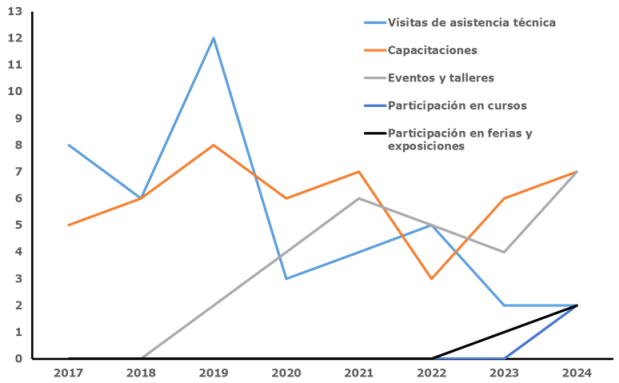
Figure 2. Dynamics of training and development actions for owners from the Los Mangos Farm
Source: Own elaboration
An approximation of the chronological analysis of the main events that, according to the owners of the farm, contributed to the evolution of the farm and to the development of skills and abilities specific to livestock farming with a view to sustainability (Figure 3) showed that, in the last eight years, a significant number of events leading to this end occurred.
The starting point for this new phase for the entity was the purchase of the animals, which was carried out with the assistance of the Provincial Small Livestock Company as an intermediary. According to the farm owners, this did not constitute the establishment of a formal working relationship. This operation was conducted with minimal selection due to a lack of technical knowledge and the urgency to begin raising the animals, a detail mentioned by Lara Rivera et al. (2024) as essential for ensuring a system with an adequate level of productivity. Other aspects that were not guaranteed were the barns for housing the animals and the feed supply, a situation typical of extensive sheep production systems in tropical regions.
A momentous event alluded to by the farm owner was the establishment of working relationships with the Institute of Animal Science, which constituted a turning point from the point of view of the application of science and technology on the farm, an aspect that is deficient in most sheep and livestock production systems in Cuba (Fundora Sánchez et al., 2024), from that moment on, this institution became the main partner in the transfer of technology in the entity.
Subsequently, two crucial zootechnical actions were implemented for the functioning of this subsystem: the construction of barns for housing the animals and the differentiated management of the animal categories. The first ensured the animals' protection from the harsh effects of inclement weather and improved the conditions for providing them with food. In this regard, Saavedra Mera (2023) concluded that these practices contribute to more ethical and efficient production processes, emphasizing that animal welfare is essential for long-term sustainability and profitability. The second action allowed for the organization of herd management based on the age and purpose of each category, an aspect that is fundamental for achieving adequate efficiency, particularly in reproductive and health indicators.
After two to three years of converting the farm to animal production, strong and stable working relationships were established with the Tropical Livestock Insemination and Improvement Center and the Small Livestock Company. With the former, progress was made on the points mentioned in previous pages, but in subsequent years the farm was also integrated into an international research and development project. Several research protocols were carried out on-site, thus actively involving the producers in the research and technology transfer processes, which significantly contributed to their technical training and personal self-esteem.
In the case of the Cattle Farm, agreements were established for the purchase and sale of feed and livestock, ensuring a significant supply of concentrated feed for the animals. This feed was strategically used for pregnant and lactating breeding females and during the most critical stages of the dry season (Barboza Navarro et al., 2022). It should be noted that this agreement could not be sustained due to logistical and economic issues, leading the farm owners to make the necessary adjustments to animal management and feeding practices, aspects that will be addressed later. Nevertheless, the company provided additional support, such as roofing material for the barns and medications.
From a technological point of view, an event that had an important impact on the production process of the farm was the planting of 0.5 ha of sugar cane (Saccharum officinarum) and 1 ha of Pennisetum purpureum vvc. Cuba CT-169, two species that improved the annual food balance since they guaranteed food for the animals in the dry season (Medrano Escobar et al., 2024).
The incorporation of the owners into a research project that was financed by the Ministry of Science, Technology and Environment of the Republic of Cuba was an event that allowed the first approach of the farm producers with the studies of the Institute of Animal Science, which consolidated the links between the farm owners with researchers from different disciplines and sectors, the research on the farm and the technology transfer system of the ICA.
The year 2020 was the most active from a technological and institutional standpoint. In this regard, Leucaena leucocephala was successfully introduced into the feed of ruminant and non-ruminant animals. It should be noted that this species was underutilized on the farm due to the owners' lack of awareness of its importance as animal feed (Balderas León et al., 2024). Furthermore, the breeding season was implemented, a reproductive system that allows for three births in two years. This method is fully aligned with the reproductive physiology of the species and contributes significantly to the farmer's profitability (Avilés Ruiz et al., 2024).
A technical control system was also activated, which improved herd management and optimized flock movement throughout the year. It's worth noting that these last two technologies are used in very few sheep production settings and in other livestock species of interest in tropical regions.
The most significant development in the last three years was the farm's integration into an international project. This contributed to a boost in the producers' self-esteem and logistical improvements on the farm, which in turn enabled one of the producers to participate in an international event. He also had a prominent presence at an international agricultural fair, where he received numerous awards, a direct result of several years of work. This work ultimately led to the farm being declared a multiplier center, a designation that facilitated community-wide genetic improvement not only for its own flock but also for a portion of the region's sheep population.
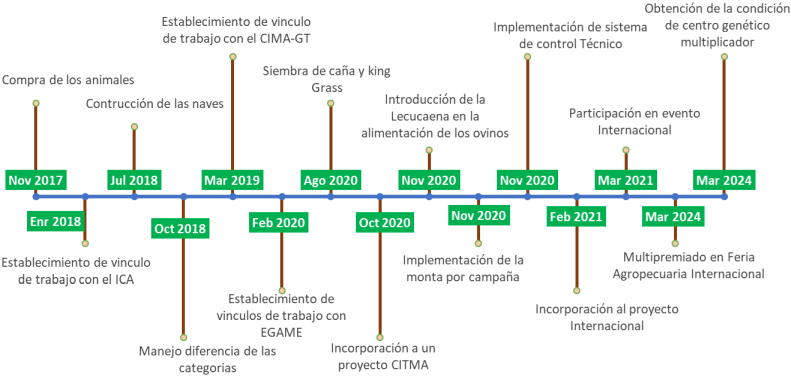
Figure 3. Sequence of the main events or occurrences
Source: Own elaboration
Los Mangos Farm diversified its production, primarily through livestock, by increasing its sheep population. This diversification occurred alongside the development of the owners' skills, both of which are essential for fostering sustainable production systems. Furthermore, the research demonstrated that training, technical assistance, participation in various events, and inter-institutional relationships were key factors in this outcome.
REFERENCES
Alarcón Márquez, M. G., Santoyo Cortés, V. H., Reyes Altamirano Cárdenas, J., & Rodríguez, M. (2024). Aprendizajes del desarrollo de proveedores de café certificado promovido por una comercializadora internacional en Veracruz, México. Agricultura, Sociedad y Desarrollo, 21(2), 186-206. https://doi.org/10.22231/asyd.v21i2.1584
Ancona Alcocer, M. del C., López Rodríguez, W. B., & Jerónimo Jiménez, D. M. (2023). La feria del queso, un impulso turístico para Tenosique, Tabasco. Journal of Tourism and Heritage Research, 6(2), 324-330. https://www.jthr.es/index.php/journal/article/view/488
Avilés Ruiz, R., Barrón Bravo, O. G., Gutiérrez Chávez, A. J., & Ruiz Albarrán, M. (2024). Principales sistemas de producción de leche en México: Recopilación actual de parámetros productivos, reproductivos y de manejo. Ciencias Veterinarias y Producción Animal, 1(2), 32-47. https://dialnet.unirioja.es/servlet/articulo?codigo=10257225
Balderas León, I., Cardador Martínez, A., Baigts Allende, D. K., Velázquez Carriles, C. A., & Silva Jara, J. M. (2024). Sustainable approach from underutilized Leucaena leucocephala biomass by polyphenols composition and protein functional properties assessment. Chemical Papers, 78(9), 5513-5525. https://doi.org/10.1007/s11696-024-03492-5
Banda Ortiz, H., Cruz Lázaro, L. M., & Vivanco Vargas, M. (2024). El Fondo Especial de Asistencia Técnica y Garantía para Créditos Agropecuarios y los servicios financieros. Agricultura, Sociedad y Desarrollo, 21(4), 456-471. https://doi.org/10.22231/asyd.v21i4.1640
Barboza Navarro, D., Solórzano Thompson, J., Vásquez Soto, A. P., & Javier Paniagua Molina, J. (2022). Optimización del costo de alimentación para ganado de engorde en Guanacaste, Costa Rica. E-Agronegocios, 8(1), 25-44. https://doi.org/10.18845/ea.v8i1.5654
Castrillón Salazar, L. L., & Rodríguez Espinosa, H. (2025). Desafíos en la gestión de información y conocimiento agropecuario a través de una comunidad virtual de extensionistas. Revista de Economia e Sociologia Rural, 63, e294087. https://doi.org/10.1590/1806-9479.2025.294087
Ferrán, A. M., Castaldo, A. O., Lastiri, S., Gutiérrez, R., Hecker, F., Dupuy, F., Kotani, I., Nicolas, A., Roberi, J. L., Aiasa Montenegro, E., Troncoso, V., Vega, D., María de Laminat, B., Franck, R. B., & Simonetti, S. J. (2023). Producción ovina agroecológica en áreas periurbanas con regulaciones ambientales. ¿Una opción productiva y económicamente factible? Vetec. Revista Académica de Investigación, Docencia y Extensión de las Ciencias Veterinarias, 5(1), 15-29. https://cerac.unlpam.edu.ar/index.php/Vetec/article/view/8061
Fundora Sánchez, L. R., Martín Alonso, G. M., Miranda Mora, I., Rivera Espinosa, R., & Reyes Duque, Y. (2024). Caracterización agroproductiva de fincas de la provincia Mayabeque, Cuba. Pastos y Forrajes, (47). https://dialnet.unirioja.es/servlet/articulo?codigo=9987748
Guamán Rivera, S. A. (2022). Desarrollo de políticas agrarias y su influencia en los pequeños agricultores ecuatorianos. Revista Científica Zambos, 1(3), 15-28. https://doi.org/10.69484/rcz/v1/n3/30
Hernández Jiménez, A. (2021). Área que ocupan los agrupamientos y tipos genéticos de los suelos en Cuba. Cultivos Tropicales, 42(3). https://ediciones.inca.edu.cu/index.php/ediciones/article/view/1607
Herrán Aguirre, M. L., Guevara Hernández, F., La O Arias, M. A., & Nahed Toral, J. (2024). Interaction of Farming Subsystems in the Don Jorge Diversified Ranch, Suchiapa, Chiapas, Mexico. Revista iberoamericana de bioeconomía y cambio climático, 10(19), 2394-2405. https://doi.org/10.5377/ribcc.v10i19.19327
Lara García, S., Cabanilla Lamulle, M., & González Osorio, B. (2021). Desarrollo comunitario: Producción de Musácea en dos zonas de la costa ecuatoriana. Revista de Ciencias Sociales, 27(Extra 3), 340-354. https://doi.org/10.31876/rcs.v27i.36513
Lara Rivera, A. L., Parra Bracamonte, G. M., Flores Garibay, R., Vázquez Armijo, J., Martínez González, J., Magaña Monforte, J. G., & Moreno Medina, V. (2024). Caracterización de los sistemas de producción de ovinos de pelo en Baja California, México. Revista Bio Ciencias, 11, 1-14. https://doi.org/10.15741/revbio.11.e1588
Medrano Escobar, A. R., Martínez Banegas, C. C., Martínez Aguilar, Y., Verdecia Acosta, D. M., & Herrera, R. S. (2024). Calidad nutritiva de Cenchrus purpureus (Schumach.) Morrone cv. Cuba CT-115 en condiciones edafoclimáticas de Zamorano, Honduras. Cuban Journal of Agricultural Science, 58. https://cjascience.com/index.php/CJAS/article/view/1136
Morales Alba, A. F., Carvajal Cogollo, J. E., & Morales Castaño, I. T. (2022). Abejas en sistemas agrícolas: Revisión de la diversidad taxonómica y funcional, y perspectivas de investigación. Acta Biológica Colombiana, 27(2), 282-291. https://doi.org/10.15446/abc.v27n2.92192
Rochin Berumen, F. L. (2024). El papel de la investigación en la Universidad Autónoma de Zacatecas para elevar los indicadores de calidad durante el periodo 2021-2024. RIDE Revista Iberoamericana para la Investigación y el Desarrollo Educativo, 15(29). https://doi.org/10.23913/ride.v15i29.2005
Rodríguez Castro, M., & Suárez Tonco, M. (2024). Factores no genéticos y heredabilidad del peso al destete de ovinos pelibuey en Cuba. Revista investigaciones agropecuarias, 7(1), 45-54. https://doi.org/10.48204/j.ia.v7n1.a6545
Saavedra Mera, K. A. (2023). Avances científicos recientes en la calidad de vida de los animales en la producción avícola. Horizon Nexus Journal, 1(4), 1-15. https://doi.org/10.70881/hnj/v1/n4/25
Conflict of interest
The author declares no conflicts of interest.
Authors' contribution
Javier Antonio Herrera Toscano wrote the manuscript and approves the version finally submitted.
