 0009-0005-5370-8541
  frank.perera@upr.edu.cu
Soleidy Rivero Amador1
0000-0001-9015-4748 soly@upr.edu.cuPedro Luis Mena Ampudia1
0000-0003-4618-7010 pedroluismenaampudia@gmail.com

Cooperativismo y Desarrollo, September-December 2025; 13(3), e883
Translated from the original in Spanish
Original article
Procedure for diagnosing information needs in information management in agricultural cooperatives
Procedimiento para diagnosticar necesidades de información en la gestión de la información en cooperativas agropecuarias
Procedimento para diagnóstico das necessidades de informação na gestão da informação em cooperativas agrícolas
Frank Daniel Perera Cala1 0009-0005-5370-8541 frank.perera@upr.edu.cu
Soleidy Rivero Amador1 0000-0001-9015-4748 soly@upr.edu.cu
Pedro Luis Mena Ampudia1 0000-0003-4618-7010 pedroluismenaampudia@gmail.com
1 University of Pinar del Río "Hermanos Saíz Montes de Oca". Pinar del Río, Cuba.
Received: 18/03/2025
Accepted: 1/11/2025
ABSTRACT
The research addresses the insufficient determination of information needs for information management at "Benigno Acosta Santana" Credit and Services Cooperative, which limits its use as a strategic tool in decision-making and business management. The overall objective is to develop a procedure for diagnosing information needs that facilitate decision-making and business management in the cooperative. The main methods used were: historical-logical, systemic-structural, analysis-synthesis, inductive-deductive, documentary analysis, participant observation, qualitative interviews, and focus groups to evaluate the proposal. An eight-step procedure was developed (scope definition, stakeholder identification, user classification, data collection/analysis, validation, implementation, and monitoring) and validated in the cooperative. The resulting methodological tool integrates people, processes, and technologies, streamlines information management, and improves strategic decision-making.
Keywords: information management; decision-making; information needs; agricultural cooperatives.
RESUMEN
La investigación aborda la insuficiente determinación de las necesidades de información para la Gestión de Información en la Cooperativa de Créditos y Servicios "Benigno Acosta Santana", lo que limita su uso como herramienta estratégica en la toma de decisiones y dirección empresarial. El objetivo general es: elaborar un procedimiento para diagnosticar necesidades de información que favorezcan la toma de decisiones y la dirección empresarial en la cooperativa. Los principales métodos utilizados fueron: histórico-lógico, sistémico-estructural, análisis-síntesis, inductivo-deductivo, análisis documental, observación participante, entrevistas cualitativas y grupo focal para evaluar la propuesta. Se genera un procedimiento diseñado en ocho pasos (definición de alcance, identificación de grupos de interés, clasificación de usuarios, recolección/análisis de datos, validación, implementación y seguimiento) y es validado en la cooperativa. La herramienta metodológica que se obtiene integra personas, procesos y tecnologías, dinamiza la Gestión de la Información y mejora la toma de decisiones estratégicas.
Palabras clave: gestión de información; toma de decisiones; necesidades de información; cooperativas agropecuarias.
RESUMO
Esta pesquisa aborda a insuficiente determinação das necessidades de informação para a Gestão da Informação na Cooperativa de Crédito e Serviços "Benigno Acosta Santana", o que limita seu uso como ferramenta estratégica para a tomada de decisões e gestão empresarial. O objetivo geral é desenvolver um procedimento para diagnóstico das necessidades de informação que facilite a tomada de decisões e a gestão empresarial dentro da cooperativa. Os principais métodos utilizados foram: histórico-lógico, sistêmico-estrutural, análise-síntese, indutivo-dedutivo, análise documental, observação participante, entrevistas qualitativas e grupos focais para avaliar a proposta. Um procedimento de oito etapas (definição do escopo, identificação das partes interessadas, classificação dos usuários, coleta/análise de dados, validação, implementação e acompanhamento) foi desenvolvido e validado na cooperativa. A ferramenta metodológica resultante integra pessoas, processos e tecnologias, otimiza a Gestão da Informação e aprimora a tomada de decisões estratégicas.
Palavras-chave: gestão da informação; tomada de decisões; necessidades de informação; cooperativas agrícolas.
INTRODUCTION
In business environments, it is common for managers to feel uncertain about making appropriate decisions that are proportionate in terms of efficiency and effectiveness. At the institutional level, there is a dispersion of data and information that sometimes duplicates tasks and makes it impossible for those who need it at the right time to retrieve it optimally.
Success in business management increasingly depends on the processes within the organization being aligned with the defined strategic direction and allowing for proactive change management (Díaz Curbelo & Marrero Delgado, 2014). Information has become a key strategic asset that requires tools to identify, acquire, organize, develop, distribute, and effectively use this resource for successful decision-making. For this reason, information management has become a fundamental priority for companies seeking to maintain a sustainable competitive advantage (Alvarado et al., 2018).
Today's society is experiencing the era of the fourth industrial revolution, characterized by three fundamental aspects: speed, scope, and impact. In this regard, 21st-century companies need to manage enormous volumes of data and process countless amounts of information. In addition, they face continuous change, so they have to be versatile and resilient. This justifies decision-making based on precise reasoning rather than empirical arguments (Morera Carballo, 2022; Morgan Asch, 2020).
In this scenario, Cuban companies are characterized by the presence of various forms of business management with obsolete structures that are inadequate to sufficiently meet current information processing requirements. Many managers perceive disorganization of information in their companies, but do not internalize the need to implement a harmonious Information Management (IM) system. There is an urgent need to open up structures for the incorporation of information and knowledge, the intelligent use of the opportunities offered by technology, creativity, and innovation as competitive factors to achieve competence and effectiveness in the fulfillment of business objectives and social mandates (Contreras Díaz et al., 2021; Fabré Machado et al., 2023).
IM in the diverse and complex Cuban business sector requires integrated and systemic tools, in line with the specific characteristics of each type of company. Similarly, in order to achieve a process of computerization in line with the improvement of company management, it is necessary to study the informational contexts, characterized by the impact of people on the use of technologies and institutional processes or activities. Various types of IM are needed, tailored to different contexts, with various forms of implementation involving logical interaction and fluidity of information in business processes or subsystems. It also requires the formalized management of information as an essential resource for achieving integration in the management of subsystems at the institutional level (Cáceres Rodríguez et al., 2023; Hernández González et al., 2020; Velázquez Soto & Díaz Arcos, 2023).
This research is based on conceptual precepts of IM and studies carried out in Cuban institutions, which have shown that this management is a complex process that streamlines business management and decision-making. An informational context study is carried out, which is defined as:
That organizational space established by the limits set by the policies and regulations of the institution or country, where information and knowledge processes are developed in accordance with the fulfillment of the social purpose of that space. Therefore, it can be an institution, a community, or any group that, for social reasons (age, interests, etc.), comes together with a specific objective (Ponjuán Dante, 2017).
The study is framed within "Benigno Acosta Santana" Credit and Services Cooperative (CCS in Spanish) in Pinar del Río, with an emphasis on characterizing the information needs of its members. The objective of this research is to develop a procedure for diagnosing information needs that favor decision-making and business management in the cooperative.
MATERIALS AND METHODS
Theoretical and empirical methods were used to determine the most essential components of the informational context in the institution under study. The materialist dialectical method stands out as the guiding method, allowing for the interpretation of the development process of the object of study in its evolution.
The type of research was exploratory descriptive. The survey was administered to the entire population of 73 members, plus the 11 managers of the CCS. In addition, a structured interview was conducted with the 11 managers of the cooperative. The survey was structured around 13 questions divided into: level of responsibility, job specifications, use of information technology tools in the research process, information management through directories, the importance of information management in decision-making, difficulties in accessing information, and information needs and the importance of knowing how to identify them. This allowed for a diagnosis to be made regarding the subject under study.
Secondary and primary sources of information were used as instruments. The secondary source of information, consisting of a documentary analysis of the information management process, and the primary sources of information used in the research are based on an analysis of empirical methods of measurement.
SPSS version 22 and Microsoft Excel 2019 software were used to process the collected data.
RESULTS AND DISCUSSION
Cooperatives are a legal form of company with a democratic structure and operation. They enable the development of activities aimed at satisfying the social needs and economic aspirations of people who join on a voluntary basis and can leave at any time (Cañabate Pozo, 2021). In this regard, the principles formulated by the International Cooperative Alliance conceptualize them as an autonomous association of persons, voluntarily formed to meet their common economic, social, and cultural needs and aspirations through a jointly owned and democratically managed enterprise (ICA, 2015).
Based on these precepts, the informational context of the CCS "Benigno Acosta Santana" in Pinar del Río is analyzed. The research appropriates theoretical and methodological approaches from IM and emphasizes the study of information needs as an IM tool in the business management process.
Main theoretical references of the research
The scientific literature highlights the concept of information as an intangible resource, approached with perspectives nuanced by the context in which this sui generis resource is developed. In this regard, since 1999, the Auckland approach (cited by Capurro, 2007) distinguishes information as a resource in three dimensions: information as a process (the act of informing); information as knowledge (that which is obtained within the training process, reducing uncertainty); and information as a thing (everything that, in some way, contains it: documents, data, objects).
From this perspective, it is important to refer to the evolution of the concept of Information Management. Since its inception, this management has been understood as a process of obtaining the right information, in the right form, for the right person, at the right cost, at the right time, in the right place, and to take the right action (Woodman, 1985). Although this purpose of IM has been present since the 1980s in various approaches to this concept, in the midst of the 21st-century digital revolution, it remains challenging to obtain, deploy, or use basic resources (economic, physical, human, material) to manage information within and for the society it serves (Ponjuán Dante, 2008).
In the business context, IM relates to obtaining solid, viable, reliable, and up-to-date information that will determine the decision-making process in an efficient and effective manner (González Borrero & Gamboa Graus, 2020). Companies need harmonious management of information as an intangible resource to reduce uncertainty in decision-making and fulfill their social mandate. This justifies the use of information systems to, in a way, manage this resource optimally. The omnipresence of information as a resource is not only evident in documents, but also in the development of the processes carried out in organizations and in the constant actions of the people who comprise them. In order to clarify a given situation and make decisions, an information system is needed that integrates various aspects related to the processes involved. This information technology is one of the tools that drives decision-making in institutional environments (Lapiedra et al., 2021).
In essence, IM is a strategic process through which an information structure is conceived and designed to ensure the proper planning, organization, management, and control of the information resources of an organization and society. ensures the appropriate use of information as an institutional resource (search, generation, storage, retrieval, dissemination), and contributes to the improvement of organizational performance (Rodríguez Cruz & Pinto Molina, 2018).
In the practice of IM, all personnel involved must possess a set of specific knowledge and skills that enable them to search, select, analyze, understand, and manage the enormous amount of information accessed through various technologies (Anchundia Delgado & Calle García, 2019).
Similarly, it is essential to identify information needs from the perspective of the expectations of the users who use it (Fteimi & Hopf, 2021). It is necessary to obtain information about users and their needs in order to achieve the harmonious functioning of the information system and guide the main IM processes, in line with the institution's objectives (Choo, 2002).
The need for information is considered to be the lack that people experience in their interaction with the world when faced with a problematic situation, that is, a gap in their knowledge or a state of uncertainty (Calva González, 2007). In an institution, a specific information need takes into account both the activity being carried out (with its different characteristics: structure, content, and historical-specific conditions) and the characteristics of the subject of the need. In addition, the dynamics of information needs are the product of the different needs that arise during the course of the actions that make up the individual's activity (Núñez Paula & Zayas Caballero, 2016).
The study confirms that IM requires the systematic identification of information needs at the strategic decision-making level, as well as the design of information flows at all organizational levels. IM is a practice that develops information processes with adequate resources, designs decision support information systems, creates information literacy programs, and develops information products and services for managers and workers, ensuring that information reaches all levels of company management in a timely and appropriate manner (Rodríguez Cruz & Pinto Molina, 2018).
Diagnosis of the information context of the CCS "Benigno Acosta Santana" in Pinar del Río
The survey is used as a data collection technique, based on a questionnaire as an instrument. During the process of tabulating the results of the tool, it became necessary to compare the results of the criteria of the cooperative's managers with those of its members. For this purpose, a structured interview was conducted with the 11 managers of the cooperative. Although the managers were given the same questionnaire as the members, the interview revealed that there is a greater incidence of IM among managers than among the rest of the members.
In the cooperative's management, 5% (6 workers) have a higher education level. The level of experience of managers and members is balanced across the established ranges, with a percentage of managers and members having less than two years of work experience (7.5%). It was also noted that men represent a significant percentage of the cooperative's General Assembly and are the dominant gender. In relation to the cooperative's respondents, there is an imbalance in the higher and middle technical levels of management, which is unfavorable and an indicator for improvement in order to better prepare them to deal with management, decision-making, and information processing.
When assessing the IM process in the cooperative, it can be said that 95% of managers and members are aware of the importance of this process. Forty-five percent say they know what their information needs are, which highlights their lack of knowledge about the subject under study.
Compared to the interview conducted with the cooperative's managers, it was found that 100% have decision-making responsibilities directly or indirectly related to their functions. There is a clear need to explore the subject under study in greater depth in order to improve the cooperative's performance. Respondents refer to the different types of information resources they need to consult in order to perform their duties effectively (Figure 1).
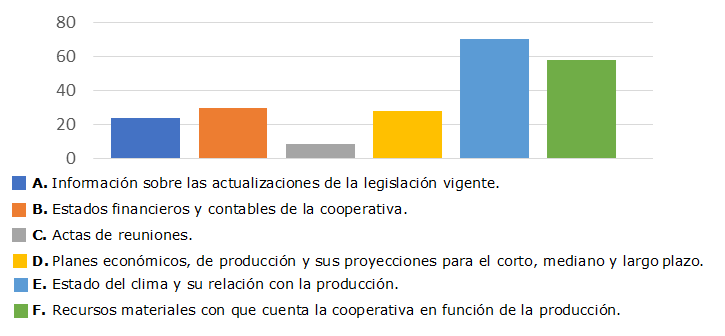
Figure 1. Types of information resources that respondents need to perform their duties
and make decisions
Source: Own elaboration
These information resources characterize information processing in the management process of this business institution. Respondents refer to practices for searching for information and satisfying their information needs. Figure 2 shows the importance of consulting informal sources, which, although it can be inferred that information is shared, demonstrates that the cooperative does not have a formal information processing structure. In addition, the institution lacks a formal and harmonious IM system that facilitates decision-making and business management (Figure 2).
This informational behavior shows that decisions are made empirically, through the processing of informal information.
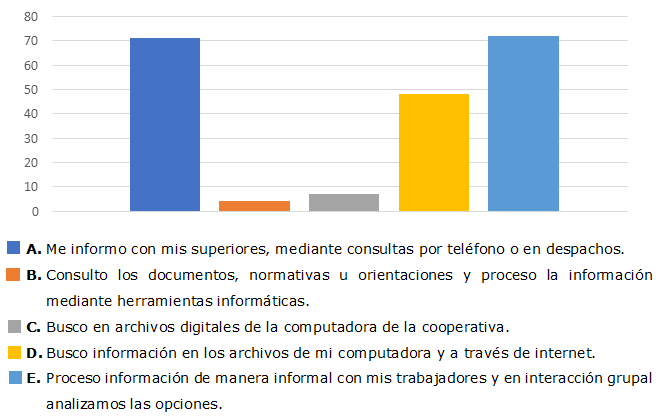
Figure 2. Informational actions recognized by respondents
Source: Own elaboration
The two techniques applied showed that 95% of managers and 75% of members agree that the main problem in searching for information is related to technology, highlighting the limited availability of technological equipment and the lack of good internet connectivity for searching for accurate and up-to-date information. In addition, the prevailing opinion is that managers and members need training in information processing techniques and computer systems.
The managers interviewed report high levels of experience in their work and do not declare any training needs with regard to IM specifications. It was possible to corroborate the existence of a lack of knowledge of specific issues and other aspects necessary to understand the relevance of knowing information needs as a management tool and for searching for specific, accurate, and up-to-date information. There is evidence of a lack of knowledge on the part of managers and associates about their information needs, even though they recognize the importance and relevance of diagnosing these needs in order to search for more accurate information that will enable effective decision-making in the cooperative.
It was found that the interviewees recognize the efforts of their managers in the improvement of information flows between them and their associates, but they affirm that it is a process that presents difficulties, mainly due to their low level of knowledge on the subject under study. The main suggestions made are as follows:
The diagnostic study carried out made it possible to analyze possible gaps and inconsistencies in the information context, taking into consideration: the people, technologies, and business management processes in the entity under study. After a detailed review of the institutional documents and the empirical techniques applied, it was possible to identify the main irregularities in information management. These are listed below:
The study carried out at the CCS "Benigno Acosta Santana" provided insight into the level of understanding of IM among managers and associates, with an emphasis on the diagnosis of information needs as an IM tool in business management. In line with the results obtained, a procedure is designed to help detect information needs and serve as a systematic diagnostic tool for these needs for the institution's managers in the IM process and in decision-making.
Fundamental components of the proposed procedure
The procedure for diagnosing information needs in information management in agricultural cooperatives is based on the following principles:
To implement the procedure, the following premises must be met:
Compliance with these premises and the procedure outlined in each step described in this proposal will facilitate the decision-making process, providing the company with a tool that is adaptable to various functional areas and flexible in terms of timing and application, thus allowing the tool to be implemented in a variety of business contexts.
Below, we take a closer look at each step of the proposed procedure, its peculiarities, and the main techniques to be used in its implementation. The procedure consists of eight systemically integrated steps, which are explained below.
Step 1: Defining the scope and objectives
The first step of the proposed procedure establishes the purpose of the information needs assessment. Define why it is necessary to identify these needs within the projections and objectives of the company under study. The scope will be defined, i.e., the areas or departments of the company involved in this assessment will be selected for analysis.
To define the scope of the information needs assessment, the following actions must be taken:
To define objectives in the diagnosis of information needs, the following actions must be taken:
In the initial study of this first step, the expected results of the diagnosis must be clearly defined. These may include detailed reports, specific recommendations, action plans, or the identification of new training needs. In addition, criteria and indicators will be established to measure the success and effectiveness of the diagnosis. These may include quantitative and qualitative indicators. This may include the number of surveys completed, improvement in user satisfaction, or increased use of certain resources.
Step 2: Identification of stakeholders
According to Freeman (1984), Stakeholder Theory considers that organizations are composed of a set of actors, which he calls stakeholders, and which usually include the following: shareholders, workers, potential investors, suppliers, customers, management, and society in general. From this perspective, the company emerges as the result of the interrelation of all these groups over time, bearing in mind that what constitutes the organization is communication and what constitutes the group is interaction (Schvarstein, 2010).
In this research, the stakeholder approach consists of identifying and collaborating with all parties involved who may influence or be affected by an initiative or project related to the diagnosis of information needs. These stakeholders may include individuals, communities, organizations, and government entities.
Key components in stakeholder involvement
In this second step, the following actions must be taken:
Step 3: Classification of users and their information needs
In this step, two fundamental aspects are defined: the identification of information users, i.e., those who need to use this intangible resource within the organization (managers, employees, customers, suppliers, etc.), and the classification of these users according to their role and specific information needs.
Information needs must be structured objectively based on the specific functions of each member of the organization or stakeholder group defined in the previous step. These needs are not static; they are framed within the time period established in the first step, must be analyzed periodically, and constitute the main axis for the practical implementation of any IM-related activity.
To achieve an adequate interpretation of information needs in the context of a company, the variables (independent and dependent) that affect the satisfaction of information needs must be analyzed. Similarly, the sources of information that can be consulted by users to satisfy these needs must be identified. To identify information needs, various techniques will be used in accordance with the variables and sources identified.
This universe of users (internal or external) is made up of specialists from different activities, who therefore have different information needs, corresponding to the type of activity they carry out inside or outside the company. The following criteria are established for the segmentation of internal and external users:
Once the segmentation of potential internal or external users of the information has been carried out, the next step is to declare the independent and dependent variables that influence the determination of information needs. In order to optimally determine an individual's information needs in a given context, both objective and subjective factors must be analyzed. Independent variables can be selected which, as their name suggests, behave autonomously and can be chosen to establish groupings in the study and classifications of certain types of information needs based on related characteristics. This type of variable can be manipulated according to the objective or scope of the information needs study because its value does not depend on another variable. The following independent variables can be identified:
Dependent variables, on the other hand, are defined as properties or characteristics that are sought to be changed by manipulating the independent variable. In essence, the dependent variable becomes the factor that is observed and measured to determine the effect of the independent variable. The following dependent variables can be defined:
Step 4: Data collection
Step 5: Analysis of the information collected
Step 6: Validation
Step 7: Presentation of results and recommendations
Step 8: Implementation and follow-up
The implementation of the procedure aims to achieve the following:
In today's society, information management has strategic and practical value in business management, with the aim of using this intangible resource to generate value in the rest of the company's activities, mainly in knowledge creation and decision-making.
In the context of Cuban state-owned companies, despite the existence of regulations to implement information management, managers' understanding of the methodological and tool-related issues involved in information management as a key business management tool is insufficient.
The diagnosis carried out in the cooperative under study revealed the need to establish standards for information management in the management process. It was confirmed that the cooperative has the economic and human resources to implement a procedure that allows for the management of this intangible resource in line with the successful performance of the organization.
The proposed procedure consists of three fundamental stages in line with management functions, in which a harmonious set of six steps is applied to establish IM in the innovation process.
REFERENCES
ACI. (2015). Identidad cooperativa: Nuestros principios y valores. Alianza Cooperativa Internacional. https://ica.coop/es/cooperativas/identidad-alianza-cooperativa-internacional
Alvarado, R., Acosta, K., & Mata De Buonaffina, Y. V. (2018). Necesidad de los sistemas de información gerencial para la toma de decisiones en las organizaciones. InterSedes, 19(39), 16-32. https://doi.org/10.15517/isucr.v19i39.34067
Anchundia Delgado, F. E., & Calle García, R. X. (2019). La gestión de las competencias informacionales en la formación del conocimiento: Fundamentos para un proceso de aprendizaje competente. ReHuSo: Revista de Ciencias Humanísticas y Sociales, 4(2), 82-91. https://doi.org/10.33936/rehuso.v4i2.2298
Cáceres Rodríguez, O., Rivero Amador, S., & Contreras Díaz, Y. de L. (2023). La gestión de información en el proceso de innovación empresarial: Propuesta de acciones para conformar un procedimiento metodológico. Revista de estudios económicos y empresariales, 35, 41-58. https://dialnet.unirioja.es/servlet/articulo?codigo=9723768
Calva González, J. J. (2007). El fenómeno de las necesidades de información: Investigación y modelo teórico. Universidad Nacional Autónoma de México. Centro Universitario de Investigaciones Bibliotecológicas. https://ru.iibi.unam.mx/jspui/handle/IIBI_UNAM/L12
Cañabate Pozo, R. (2021). Cooperativa y empresa familiar. CIRIEC-España, revista jurídica de economía social y cooperativa, (37), 207-246. https://doi.org/10.7203/CIRIEC-JUR.37.17424
Capurro, R. (2007). Epistemología y ciencia de la información. Enl@ce: revista Venezolana de Información, Tecnología y Conocimiento, 4(1), 11-30. https://produccioncientificaluz.org/index.php/enlace/article/view/13372
Choo, C. W. (2002). Information Management for the Intelligent Organization: The Art of Scanning the Environment. Information Today, Inc.
Contreras Díaz, Y. de L., Rivero Amador, S., González Pérez, M., & Ding, B. (2021). La Gestión de Información en el contexto institucional y el rol de los directivos. Revista Cubana de Información En Ciencias de La Salud, 32(1), e1798. https://acimed.sld.cu/index.php/acimed/article/view/1798
Díaz Curbelo, A., & Marrero Delgado, F. (2014). El modelo SCORD y el Balanced Scorecard, una poderosa combinación intangible para la gestión empresarial. Revista Científica Visión de Futuro, 18(1), 36-57. https://visiondefuturo.fce.unam.edu.ar/index.php/visiondefuturo/article/view/659
Fabré Machado, I., Cabriales Saez, Y., & Díaz Velis, C. S. (2023). El perfeccionamiento de la empresa socialista en la actualización del modelo socioeconómico cubano. Retos y posibilidades. Directivo al Día, 22(1), 53-64. https://www.directivoaldia.villaclara.cu/index.php/dad/article/view/101
Freeman, R. E. (1984). Strategic Management: A Stakeholder Approach. Pitman.
Fteimi, N., & Hopf, K. (2021). Knowledge Management in the Era of Artificial Intelligence: Developing an Integrative Framework. https://doi.org/10.20378/irb-49911
González Borrero, M., & Gamboa Graus, M. E. (2020). Sistema de acciones para captar información en Oficina Nacional de Estadística e Información del municipio Manatí. Didáctica y Educación ISSN 2224-2643, 11(2), 168-192. https://revistas.ult.edu.cu/index.php/didascalia/article/view/959
Hernández González, Y., Contreras Díaz, Y. de L., Rivero Amador, S., & Carpio Vento, M. (2020). Acciones para la gestión de información en la toma de decisiones desde las funciones de los directivos en el contexto empresarial. Revista de estudios económicos y empresariales, (32), 59-68. https://dialnet.unirioja.es/servlet/articulo?codigo=8131093
Lapiedra, R., Forés, B., Puig Denia, A., & Martínez Cháfer, L. (2021). Introducción a la gestión de sistemas de información en las empresas. Universitat Jaume I. https://doi.org/10.6035/Sapientia178
Morera Carballo, M. (2022). Los Sistemas de Información Gerencial y su evolución hacia la Cuarta Revolución. Revista Nacional de Administración, 13(1), 95-103. https://doi.org/10.22458/rna.v13i1.4236
Morgan Asch, J. (2020). La resiliencia: Habilidad esencial para hacerle frente a la cuarta revolución industrial. Revista Nacional de Administración, 11(1), 21-31. https://doi.org/10.22458/rna.v11i1.2970
Núñez Paula, I. A., & Zayas Caballero, I. (2016). Análisis de modelos sobre Comportamiento Informacional, desde un enfoque socio-psicológico. Bibliotecas. Anales de investigación, 12(1), 63-89. https://revistasbnjm.sld.cu/index.php/BAI/article/view/161
Ponjuán Dante, G. (2008). Gestión de información: Precisiones conceptuales a partir de sus orígenes. Informação & Informação, 13(1esp), 26-38. https://doi.org/10.5433/1981-8920.2008v13n1espp26
Ponjuán Dante, G. (2017). Aproximaciones al estudio de contextos informacionales de instituciones cubanas del sector de educación superior. Palabra Clave (La Plata), 7(1), e035. https://doi.org/10.24215/18539912e035
Rodríguez Cruz, Y., & Pinto Molina, M. (2018). Modelo de uso de información para la toma de decisiones estratégicas en organizaciones de información. Transinformação, 30(1), 51-64. https://doi.org/10.1590/2318-08892018000100005
Schvarstein, L. (2010). Psicología social de las organizaciones: Nuevos aportes. Paidós.
Velázquez Soto, O. E., & Díaz Arcos, L. (2023). Herramienta para evaluar la comprensión de la Gestión de Información y del Conocimiento en Infomed. Educación Médica Superior, 37(4), e3905. https://ems.sld.cu/index.php/ems/article/view/3905
Woodman, L. (1985). Information Management in Large Organizations. En B. Cronin, Information Management: From Strategies to Action. Aslib.
Conflict of interest
Authors declare that they have no conflicts of interest.
Authors' contribution
All the authors reviewed the writing of the manuscript and approve the version finally submitted.
