
Cooperativismo y Desarrollo, January-April 2026; 14(1), e753
Translated from the original in Spanish
Original article
Circular economy and local development in La Maná: agricultural, livestock and agroindustrial production
Economía circular y desarrollo local en La Maná: producción agrícola, pecuaria y agroindustrial
Economia circular e desenvolvimento local em La Maná: produção agrícola, pecuária e agroindustrial
Mario Antonio García Pérez1  0000-0002-0304-9665
  marioifal@gmail.com
Tatiana Carolina Gavilánez Buñay2 0000-0002-7422-3122 tatiana.gavilanez@utc.edu.ec
Marjorie Gissela Casco Toapanta2 0000-0002-9868-9023 marjorie.casco7525@utc.edu.ec
Daliannis Rodríguez Céspedes3 0000-0003-0389-740X rcdaly92@gmail.com
1 University San Gregorio of Portoviejo. Ecuador.
2 Technical University of Cotopaxi. Ecuador.
3 UTE University. Ecuador.
Received: 25/06/2024
Accepted: 18/03/2026
ABSTRACT
This paper analyzes the implementation of the circular economy in agricultural, livestock,
and agroindustrial production in La Maná, a canton in the Cotopaxi province, Ecuador. This
canton, with This study analyzes the implementation of the circular economy in agricultural,
livestock, and agroindustrial production in the canton of La Maná, in the province of Cotopaxi, Ecuador.
This canton, which has a humid tropical climate, has an economy based primarily on these
productive activities. Using a mixed-methods approach that combines quantitative and qualitative
methods, the study evaluates the adoption of circular economy principles to improve resource
efficiency, reduce waste, and promote sustainability. Circularity indicators are established to measure
the effectiveness of the implemented strategies, such as the rate of utilization of agricultural
and agroindustrial waste, the use of renewable energy, and crop diversification. The results show
that the circular economy could offer significant benefits in terms of sustainability and
local competitiveness. It is concluded that, by adopting these practices, the canton could improve
its profit margins, access more sustainable markets, and generate green jobs, becoming a model
for local development in the agroindustrial context.
Keywords: circular economy; local development; agricultural production; livestock
production; agroindustrial production; sustainability.
RESUMEN
El presente trabajo analiza la implementación de la economía circular en la producción
agrícola, pecuaria y agroindustrial del cantón La Maná, en la provincia de Cotopaxi, Ecuador. Este
cantón, que presenta un clima tropical húmedo, tiene una economía basada principalmente en
estas actividades productivas. A través de un enfoque mixto que combina métodos cuantitativos
y cualitativos, se evalúa la adopción de principios de economía circular para mejorar la
eficiencia de los recursos, reducir residuos y promover la sostenibilidad. Se establecen indicadores
de circularidad para medir la efectividad de las estrategias implementadas, como la tasa
de aprovechamiento de residuos agrícolas y agroindustriales, el uso de energía renovable, y
la diversificación de cultivos. Los resultados muestran que la economía circular podría ofrecer
grandes beneficios en términos de sostenibilidad y competitividad local. Se concluye que, con la
adopción de estas prácticas, el cantón podría mejorar sus márgenes de ganancia, acceder a mercados
más sostenibles y generar empleo verde, convirtiéndose en un modelo de desarrollo local en el contexto agroindustrial.
Palabras clave: economía circular; desarrollo local; producción agrícola; producción
pecuaria; producción agroindustrial; sostenibilidad.
RESUMO
Este trabalho analisa a implementação da economia circular nas produções agrícolas, pecuárias
e agroindustriais no cantão La Maná, na província de Cotopaxi, no Equador. Este cantão, com
clima tropical úmido, tem uma economia baseada principalmente nessas atividades produtivas.
Através de uma abordagem mista que combina métodos quantitativos e qualitativos, avalia-se a
adoção dos princípios da economia circular para melhorar a eficiência dos recursos, reduzir resíduos
e promover a sustentabilidade. São estabelecidos indicadores de circularidade para medir a
eficácia das estratégias implementadas, como a taxa de aproveitamento de resíduos agrícolas
e agroindustriais, o uso de energia renovável e a diversificação de cultivos. Os resultados
mostram que a economia circular poderia oferecer grandes benefícios para a sustentabilidade e
a competitividade local. Conclui-se que, com a adoção dessas práticas, o cantão poderia
melhorar suas margens de lucro, acessar mercados mais sustentáveis e gerar empregos verdes,
tornando-se um modelo de desenvolvimento local no contexto agroindustrial.
Palavras-chave: economia circular; desenvolvimento local; produção agrícola; produção
pecuária; produção agroindustrial; sustentabilidade.
INTRODUCTION
Agricultural, livestock, and agroindustrial production are socioeconomic activities of
great importance to Ecuador, given that in recent years they have changed with global
development, and this is evident in food consumption patterns. For this reason, the Ministry of
Agriculture, Livestock, and Fisheries (MAGAP in Spanish) was established in Ecuador with the mission
to regulate, standardize, facilitate, monitor, and evaluate the management of the
country's agricultural, livestock, aquaculture, and fisheries production; promoting actions that enable
rural development and foster the sustainable growth of production and productivity in the sector
by supporting the development of producers, particularly smallholder family farmers, while
maintaining incentives for productive activities in general (Zamora Boza et al., 2021).
The circular economy is a model of production and consumption aimed at maintaining the
value of resources, products, and materials for as long as possible within the economic system,
minimizing waste generation through strategies of reuse, recycling, and the recovery of byproducts.
This approach stands in contrast to the traditional linear "extract-produce-dispose" model,
promoting regenerative and resource-efficient production systems (Geissdoerfer et al., 2017; Kirchherr
et al., 2017). In the agri-food sector, the circular economy takes on particular relevance due to
the high volume of organic waste generated in agricultural and agroindustrial production
chains, which can be valorized through processes such as composting, bioenergy, the production
of bioproducts, or reuse as agricultural inputs (Jurgilevich et al., 2016).
Agroindustrial production in Ecuador is linked to the development of capitalism, as this is one
of the systems that enables the emergence of new production relations in the countryside,
thereby altering the space, the territory, and the lives of the people who inhabit it. One of the
key components of agroindustry is the technological factor, as it is through this that a process
is developed which displaces traditional peasant production and introduces machinery as the
driving force behind agricultural production and the transformation of production; furthermore, it
harnesses scientific knowledge to increase crop profitability (Pacheco et al., 2018).
In the constant search for sustainable and economically viable models, the canton of La
Maná, located in the province of Cotopaxi, Ecuador, has emerged as a key reference point in the
region's agricultural, livestock, and agroindustrial landscape. Its commitment to sustainability and
local development is reflected in the application of circular economy principles across its
various productive activities (Toledo et al., 2023).
The canton of La Maná is composed of three urban parishes (La Maná, El Carmen, and El
Triunfo) and two rural parishes (Guasaganda and Pucayacu), where agricultural and livestock
activities predominate, sustaining its growing population and attracting local migration. This has
enabled the growth of a strong tertiary sector, particularly within the urban social fabric with the
flourishing of commerce. In the urban parishes, agricultural production of bananas and orito is
predominant. Unlike the urban parishes, livestock farming predominates in the rural parishes, with
excellent production of meat, milk, and dairy products, which primarily supply the canton and
nearby provinces such as Guayas and Los Ríos.
The circular economy, at its core, proposes a sustainable model in which resources are
used efficiently, minimizing waste and closing product life cycles. This approach is presented as a
key strategy for local development, especially in the context of La Maná canton, where
agricultural, livestock, and agroindustrial production plays a fundamental role in the regional economy
(Terneus Páez & Viteri Salazar, 2022).
In this context, this study analyzes the dynamics of production in La Maná and its
surrounding areas, highlighting how the adoption of circular approaches has contributed to strengthening
the local economy. Furthermore, it addresses the importance of closing product life cycles
and minimizing waste in the interest of efficiency and sustainability.
MATERIALS AND METHODS
The research was conducted in the canton of La Maná, located in the province of
Cotopaxi, Ecuador, between the approximate coordinates 00°562 S and 79°132 W. This canton has
a humid tropical climate, with annual rainfall ranging from 2,000 to 3,000 mm and
average temperatures between 23 and 25 °C. Its economy is based primarily on agricultural,
livestock, and agroindustrial production. In this context, the implementation of circular economy
practices in the region's productive sectors was explored, with a focus on resource efficiency, waste
reduction, and the integration of productive activities.
The methodology employed combined quantitative and qualitative approaches to assess
the effectiveness of the strategies implemented within the canton's agricultural production
context. Quantitative indicators were used to measure circularity, enabling an evaluation of
resource efficiency and waste reduction. These indicators provide a clear framework for assessing
the impact of circular economy practices on agricultural, livestock, and agroindustrial production
in the canton.
Quantitative circularity indicators
The incorporation of quantitative indicators in the assessment of circularity is key to
measuring the effectiveness of the implemented strategies. The indicators used are presented below:
- Agricultural waste utilization rate: Measures the percentage of crop residues, such
as crop stalks, bagasse, and shells, that are recycled or reused. The target value for
this indicator is e" 60%, and it is obtained through surveys of producers and direct observation.
- Proportion of valorized agroindustrial waste: Indicates the percentage of waste
generated by the agroindustrial sector, such as cocoa shells and whey, that is used in other
production processes. The target value is e" 50%, and the measurement is conducted
through interviews with agroindustrial producers.
- Use of renewable energy in production: Reflects the proportion of production units
that use renewable energy sources, such as solar, hydro, wind, or biogas. The target value
for this indicator is e" 25%, and it is assessed through surveys of producers and
energy usage records.
- Livestock waste recycling rate: Assesses the percentage of manure and other
livestock waste recycled for the production of biofertilizers or biogas. A target value of e" 40%
is established, measured through surveys of livestock producers and analysis of
production practices.
- Crop diversification on farms: Measures the number of different crops grown on
each farm. The target value is e" 3 major crops per farm, and data are obtained
through agricultural censuses and interviews with farmers.
- Proportion of producers in associations: Determines the percentage of
producers participating in associations or cooperatives. The target value is e" 30%, and
information is collected through producer surveys and interviews with key stakeholders.
Quantitative component
To obtain data on these indicators, a survey was administered to a representative sample
of agricultural, livestock, and agroindustrial producers in La Maná. The sample was selected
using stratified random sampling, with a sample size of 384 producers, ensuring a 95%
confidence level and a 5% margin of error. Additionally, an agricultural census and interviews with
key informants were conducted to obtain information on crop diversification and participation
in associations.
Qualitative component
Semi-structured interviews were conducted with local authorities, leaders of producer
associations, and academic experts in sustainability and the circular economy. The interviews were
transcribed and analyzed using open, axial, and selective coding techniques, allowing for the identification
of perceptions and opinions regarding the challenges and opportunities of implementing
circular practices in the local context.
Data analysis
The data obtained through the survey were analyzed using descriptive statistics,
calculating absolute and relative frequencies for each of the indicators. The qualitative analysis of the
interviews allowed for a deeper exploration of the barriers and opportunities perceived by key
stakeholders in relation to the circular economy.
RESULTS AND DISCUSSION
The circular economy as a competitive and sustainable strategy
The circular economy has emerged as a key approach in the transition toward more
sustainable production models. This model stands out for its ability to transform traditional economic
systems -which are based on the linear "extract, produce, dispose" model- into circular systems
where resources remain in use for as long as possible, minimizing waste and dependence on
non-renewable resources. Instead of following the pattern of consuming resources and then
discarding them, the circular economy seeks to close material cycles through reuse, recycling, and
the recovery of byproducts. This transformation not only improves environmental sustainability
but also opens new opportunities for competitiveness for local businesses and economies
(Geissdoerfer et al., 2017).
In a global market increasingly focused on sustainability, the competitiveness of a region
or company is closely linked to its ability to adapt to demands for resource efficiency and
minimize environmental impact. In this context, the circular economy emerges as a key driver
of competitiveness for several reasons:
- Cost reduction and resource efficiency: By maximizing the use of available
resources, companies that implement circular practices can significantly reduce their production
costs. The reuse of materials, waste reduction, and the use of renewable energy
decrease dependence on external inputs, allowing companies to achieve more sustainable
profit margins. In the case of La Maná, where agricultural and agroindustrial production is
a fundamental pillar, the adoption of circular practices could lead to a considerable
reduction in costs by utilizing agroindustrial waste and byproducts generated during the
production process.
- Access to green markets: In a global context where consumers and businesses
increasingly value sustainable products, the circular economy offers a competitive advantage
by facilitating access to international markets that demand products with a lower
carbon footprint, less waste, and transparent and sustainable production practices. For
the agricultural and agroindustrial sector in La Maná, this could mean privileged access
to international markets, where organic or certified sustainable products are in
growing demand.
- Innovation and new product development: The circular economy fosters innovation
by encouraging the creation of new products and services based on waste recovery and
resource efficiency. Local agroindustrial companies in La Maná have the opportunity to
develop high-value-added products, such as bioproducts, biofertilizers, or products derived
from cocoa or sugarcane waste. This diversification of their product offerings would allow
them not only to increase their competitiveness but also to position themselves as leaders in
a market that values sustainability.
- Improved resilience to economic and climate crises: The circular economy is also linked
to the resilience of communities and businesses in the face of economic crises or
climate change. By reducing dependence on external resources and promoting the creation
of more local and regenerative production systems, agroindustrial companies in La
Maná would be better positioned to face challenges arising from climate variability or
fluctuations in commodity prices on the global market.
Sustainability is the fundamental principle of the circular economy. By closing material loops
and reducing waste generation, environmental impact is minimized and the rational use of
natural resources is promoted. This approach not only contributes to long-term environmental
conservation but also aligns with global sustainable development goals, such as reducing the carbon
footprint and the efficient use of natural resources. In the case of La Maná, the implementation of
the circular economy has a direct impact on several key aspects of the region's sustainable development:
- Reduction of waste and pollution: In La Maná's agricultural and agroindustrial
systems, much of the waste generated -such as sugarcane waste, cocoa byproducts, and
dairy production waste- is not properly utilized. This waste contributes to pollution and the
loss of valuable resources. The circular economy would make it possible to transform
this waste into new products or reuse it as inputs for other production processes,
thereby reducing the amount of waste generated and improving the region's environmental quality.
- Conservation of natural resources: The circular approach also promotes the efficient use
of natural resources and the conservation of local biodiversity. The implementation of
practices such as composting, water reuse in more efficient irrigation systems, and the use
of renewable energy could help preserve local ecosystems and agricultural soils,
essential elements for ensuring the sustainability of agri-food production in La Maná.
- Development of a green economy: Through the implementation of the circular economy,
La Maná has the opportunity to develop a green economy in which productive activities
are aligned with global sustainability goals. This would not only contribute to improving
the local environment but could also generate green jobs in sectors such as waste
management, bioenergy production, recycling, and regenerative agriculture, diversifying the
economy and improving the quality of life for the region's residents.
The impact of the circular economy in La Maná can be significant and transformative. The
adoption of circular practices by the region's agroindustrial and agricultural activities could lead to
increased efficiency and local competitiveness. Among the main expected impacts are:
- Improved local competitiveness: Implementing the circular economy would
allow agroindustrial companies in La Maná to improve their profit margins by reducing
operating costs, accessing green markets, and diversifying their product offerings. This
would strengthen the local economy and contribute to the development of a more efficient
and sustainable economic model.
- Development of more sustainable production models: The transition to the circular
economy could shift the focus of La Maná's production systems toward more sustainable and
resilient models. By utilizing natural resources more efficiently and reducing the carbon
footprint, the circular economy would help improve air quality, soil health, and local biodiversity,
all essential for ensuring the region's long-term sustainability.
- Job creation and economic opportunities: The circular economy generates new
employment opportunities in areas such as waste management, the production of bioproducts,
and innovation in agroindustrial processes. This development could contribute to the
creation of green jobs, particularly in rural areas, which would improve the living conditions of
La Maná's residents and strengthen their economic stability.
- Strengthening resilience to climate change: The implementation of more
sustainable agricultural practices and production systems less dependent on external inputs
would make La Maná more resilient to the challenges posed by climate change, such as
droughts, floods, or extreme weather events.
The circular economy offers La Maná the opportunity to reinvent its agri-food production
systems, transforming environmental and economic challenges into development
opportunities. Implementing circular strategies in an integrated manner would not only improve
local competitiveness but also position the canton as a leader in sustainability and the green
economy within the regional and national context. To achieve this change, the commitment of all
local stakeholders is necessary: producers, local authorities, businesses, and educational
institutions, who must work collaboratively to implement circular practices that promote more
equitable, sustainable, and resilient development for future generations.
Territorial profile of La Maná
Agribusiness in La Maná has experienced a significant boom, generating employment and
fostering local development. The transformation of local raw materials, such as cocoa, into
high-value-added products has been key to diversifying the local economy. Cooperation between
small producers and agribusinesses has strengthened community ties and positioned the canton on
the regional economic landscape (Figure 1).
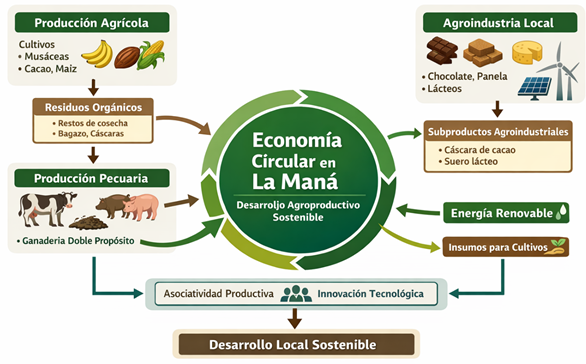
Figure 1. Conceptual model of the circular economy applied to La Maná
Source: Own elaboration
The adoption of advanced agricultural technologies has enabled farmers in La Maná to
increase efficiency and reduce environmental impact. From the use of drones for crop monitoring to
smart irrigation systems, innovation has become a catalyst for sustainability and economic growth.
Despite these successes, La Maná, like other regions in Ecuador, faces persistent challenges,
such as climate change and pressure on natural resources (Chengot et al., 2024). However,
these challenges also present opportunities to further strengthen the circular economy and foster
local resilience through the implementation of more sustainable agricultural and livestock
practices (Murphy et al., 2023).
The circular economy is not only sustainable but also a competitive model. This approach
contrasts with traditional models, proposing more efficient and environmentally friendly consumption
and production (Almeida Guzmán & Díaz Guevara, 2020). An analysis of agricultural and
livestock systems in the Guasaganda parish, in La Maná canton, reveals the need to identify practices
that promote circularity and sustainability in livestock production.
According to the Development and Land Use Plan for La Maná canton (2015-2020), the
latest version available on the official website of La Maná Municipal Decentralized
Autonomous Government (GAD in Spanish), the region is characterized by strong livestock production,
followed by agriculture. With a tropical climate, average temperatures range from 23.6 to 25.2 °C,
with highs of 31.5 to 34.0 °C and lows of 14.5 to 17 °C. Average annual precipitation ranges
from 2,000 to 3,000 mm, distributed over nine months, with three or fewer dry months per
year, during which the number of physiologically dry days varies between 17 and 68. Although
it belongs administratively to the mountainous region, its agriculture focuses mainly on
products typical of the coastal region, such as bananas, plantains, orito, cacao, coffee, cassava,
citrus fruits, and tobacco, among others.
According to data compiled by the Provincial Government of Cotopaxi and corroborated by
field research, agricultural production in the region is notable. Banana cultivation leads the way
(Pallo Macias et al., 2024) with approximately 4,220.07 hectares, followed by coffee with
2,967.77 hectares and plantains with 931.69 hectares. In addition, cocoa production is recorded at
around 304.22 hectares, with 247 ha managed by MAGAP in Ecuador, and 44 ha for coffee,
distributed among different parishes (20 ha are in La Matriz, 21 ha in Guasaganda, and 3 ha in
Pucayacu). Although sugarcane is not considered a commercial crop, its processing into panela and
aguardiente is being explored in the parishes of Pucayacu and Guasaganda. As for livestock production, it
is adapted to local conditions, accounting for 38.11% of the canton's territory, primarily used
for feeding cattle. Daily milk production, with 25,241.98 ha of pasture, reaches 20,000 L, with
27.27% for self-consumption and 72.73% for commercial sale. The rural parishes of Guasaganda
and Pucayacu stand out for their agroindustrial potential, generating employment, while the
urban areas are experiencing strong and expanding residential, commercial, and tourism development.
Rice is grown seasonally for self-consumption in places like Chipe Hamburgo, and
pineapple cultivation is under development, with MAGAP conducting analyses for loans from the Banco
de Fomento. This analysis is based on the Development and Land Use Plan for La Maná
canton (2015-2020), which highlights the importance of livestock and agricultural production, with
an emerging agroindustrial sector that has become the subject of updated studies in the area and
its surroundings.
Characterization of the agricultural production system
Agricultural production encompasses land management, harvesting, forestry, and livestock
raising, utilizing scientific and technical advances. Since its founding, Ecuador has depended on
primary resources such as cocoa, bananas, and coffee (Viteri Vera & Tapia Toral, 2018). Although
these activities generate capital and support the secondary industry, agrarian structures have not
yet succeeded in transforming into effective agroindustrial systems. Sectoral industrial policies
can negatively impact the agricultural sector, undermining the resources mobilized.
Agricultural investment must be sustainable and managed by institutions that promote development
and innovation. In the 21st century, the service sector has become the most commercially dynamic
in Ecuador, surpassing agriculture, which has historically been crucial to the economy after oil
(Viteri Vera & Tapia Toral, 2018).
The agricultural structure in the parish of Guasaganda is characterized by its primary
focus, centered mainly on agriculture and livestock, with the latter being the dominant activity due
to the quality of the pasture. However, agricultural modernization is low, which has led to the
creation of farmers' and ranchers' associations to protect members and improve prices, recognizing
the importance of collaboration for the progress and strengthening of agricultural activities.
Agricultural activity in Guasaganda encompasses a wide variety of crops, both perennial
and seasonal, covering a total area of 1,598.7 ha, representing 6.4% of the local territory.
Notable crops include orito (25.4%), Dominico plantains (15.9%), cacao (12.5%), oranges (5.01%),
and sugarcane (5.6%), among others (Table 1).
Each of these crops contributes significantly to agricultural activity in terms of planted area
and net sales. For example, plantains account for 15.3% of the planted area and 24.3% of net
sales revenue, while cocoa occupies 12.5% of the planted area and contributes 11.9% of net
sales revenue. These data highlight the importance of each crop in the local economy, as reflected
in the percentages of planted area and net sales for each (Garófalo Untuña et al., 2023).
Table 1. Agricultural production in the Guasaganda parish
Crop |
Planted area (%) |
Net sales revenue (%) |
Orito (Musa acuminata) |
25.4 |
49.55 |
Dominican plantain (Musa paradisiaca) |
15.9 |
10.3 |
Cacao (Theobroma cacao) |
12.5 |
11.9 |
Fresh almond (Prunus dulcis) |
12.4 |
Not available |
Orange (Citrus sinensis) |
5.01 |
Not available |
Sugar Cane (Saccharum officinarum) |
5.6 |
0.3 |
Other crops |
23.19 |
Not available |
Source: Survey of agricultural producers in the Guasaganda parish
The discrepancy between the percentages of planting and harvesting of products is due to
losses, mainly from pests, diseases, or lack of care. In contrast, the differences between the
percentages of harvest and sales are attributed to self-consumption on the farms, feeding farm animals,
or distribution among workers or family members.
In the Pucayacu parish, located in a rural area, wholesale and retail trade
predominate, complemented by fish farming, and constitute the main source of income for local families. In
this area, families are primarily engaged in agriculture, growing traditional short-cycle crops such
as cassava, plantains, hard corn, sugarcane, oranges, lemons, orito, and Chinese potatoes,
among others (Table 2). It is worth noting that in the Solonso district, cocoa cultivation is
predominant. These crops are essential for the food subsistence of local families and, in some cases, are sold
on a small scale.
Table 2. Agricultural production in the Pucayacu parish
Crop |
Yield (t/ha) |
Sugar Cane (Saccharum officinarum) |
4.00 |
Durum corn (Zea mays) |
10.20 |
Musaceae |
2.00 |
Cacao (Theobroma cacao) |
2.06 |
Bermuda grass (Cynodon dactylon) |
8.30 |
Source: Survey of agricultural producers in Pucayacu
Sugarcane cultivation is predominant in the Pucayacu parish (Table 3), covering an area of
1,380 ha, mainly located in the La Carmela and Choaló communes, as well as in the Sandomo and
La Argentina districts. In 2020, this agricultural activity involved approximately 120
producers, according to records from the MAGAP Technical Unit (López Vidal & González Osorio, 2022).
Table 3. Crops, location, area in hectares, yield, and marketing
Crop |
Location |
Area (ha) |
Yield (t/ha) |
Market |
Sugar Cane (Saccharum officinarum) |
La Carmela, Choaló, Sandomo, and La Argentina |
1380 |
4.0 |
- Local market
- For personal consumption
|
Durum corn (Zea mays) |
Pucayacu, Solonso |
850 |
10.2 |
- Local market
- For personal consumption
|
Musaceae |
Pucayacu |
755 |
2.0 |
- Local market
- For personal consumption
|
Cacao (Theobroma cacao) |
Solonso |
360 |
2.06 |
|
Pasto |
Pucayacu (Solonso, Gradual, El Tonglo, La Carmela, La Argentina, Choaló, Sandomo, San Ramón, El Naranjal) |
24,823.57 |
Not quantified |
|
Source: Interviews with key informants, such as leaders of local organizations,
MAGAP officials, and producers
Durum corn is widely grown in the Solonso area, where it occupies approximately 850 hectares
of land (Ministry of Agriculture and Irrigation, 2020). Meanwhile, the cultivation of musaceae,
which includes plantains and bananas, covers a total area of 755 ha, in both urban and rural areas
of the Pucayacu parish. Cacao is grown primarily in the Solonso district, occupying
approximately 360 ha of land for production. Regarding land use, approximately half of the parish's territory
is allocated to cultivated pastures (51%), followed by areas dedicated to arboriculture with
pastures (5%), planted pastures (22%), managed natural forests (24%), short-cycle crops (7%),
and natural forest (41.4%). In addition, a smaller percentage is allocated to bodies of water (0.6%).
As part of efforts to strengthen the sugarcane value chain, various institutions have
collaborated to promote organic production. MAGAP, the Ayuda en Acción Foundation through the
Ecuadorian Populorum Progressio Fund, the Provincial GAD of Cotopaxi,
and the Parish GAD of Pucayacu have joined forces in this endeavor. Through a joint project for the production and marketing of
granulated panela, these entities have provided technical assistance to producers.
La Carmela commune stands out as a pioneer in this process, having successfully obtained
organic certification. This achievement has enabled the inclusion of 28 producers from the area. Of
the 120 identified sugarcane producers, approximately 24.4% work cooperatively, indicating
potential for the development of joint production. However, this situation has not been fully leveraged in
all the districts and communes of the parish, due to the persistence of traditional production
methods and apprehension toward cooperative arrangements.
Currently, there are no evident measures to ensure the sustainability of agri-food systems or
the implementation of resilient agricultural practices that improve productivity. The land area
dedicated to agricultural production for agri-food sustainability is characterized by monocultures
without the use of biotechnology, which limits the
system's diversification and resilience.
Production systems are based on empirical practices and family traditions, without a scientific or
technological approach that promotes efficiency and sustainability. There is also a lack of actions to
conserve the genetic diversity of seeds and cultivated plants, which could affect the agricultural
system's ability to adapt to future challenges.
La Maná, El Carmen, and El Triunfo are urban parishes where agricultural production is not
very feasible due to the predominant use of land for housing and the economic focus on
commerce (García Bravo et al., 2024). A large portion of the inhabitants of these areas are engaged in
the cultivation, processing, and export of bananas and tobacco on farms outside the urban
parishes of La Maná canton. The sandy and rocky soils in these areas require large amounts of water
for large-scale agricultural production, thus limiting its viability. Agriculture is concentrated
in households for personal consumption, but low production is mainly attributed to
unfavorable environmental conditions such as climate, pests, and diseases. Furthermore, the lack of
large-scale agricultural production is due to the presence of small-scale gardens ( ) rather than
extensive croplands, which makes it difficult to achieve high yields (Bassante Jiménez & Zambrano
Rosales, 2021).
Characterization of the livestock system
Livestock production systems stand out as a comprehensive strategy that not only ensures
the daily livelihood of communities but also contributes to ecosystem conservation, promotes
wildlife, and preserves cultural values. In Ecuador, livestock production has experienced continuous
growth. With more than 4,487,000 head of cattle for meat and milk, the country has a predominance
of native cattle, with meat production concentrated mainly on the coast and in the Amazon
region, while dairy production is centered in the highlands. Dual-purpose cattle farming, for both
meat and milk, accounts for the largest share of national livestock production, highlighting its
importance to the country's economy and food supply.
In the early 2000s, Ecuador faced a severe economic crisis, which led landowners to sell
their properties, thereby attracting new residents to the region. During this period, the livestock
sector began to develop. Despite inadequate technical guidance from the government,
producers introduced new pastures and cattle breeds on their own initiative to improve milk production
and raise disease-resistant breeds (Oleas, 2019). Initiatives emerged, such as the Asopagua raw
milk collection center and association, as well as a market for agricultural products and
livestock byproducts in the center of the parish. In addition, a livestock market was established in Pucayacu.
Livestock systems in the Guasaganda parish (Andrade et al., 2023) constitute the main
economic activity, with an emphasis on cattle farming -both dairy and beef- and dual-purpose
systems (Table 4).
Table 4. Livestock production in the Guasaganda parish
Species |
Production system |
Average number of animals per producer |
Cattle |
Dual-purpose |
150 |
Cattle |
Beef |
380 |
Cattle |
Milk |
300 |
Pigs (Sale and personal consumption) |
Fattening |
10 |
Pigs (Raised for sale) |
Fattening |
5 |
Sheep |
Meat |
10 |
Poultry |
Personal consumption |
10 |
Source: Survey of livestock producers in Guasaganda
Livestock production occurs in all agroecological zones, with variations in the number of head
of cattle and milk production ranging from 30 to 300 units, with an average production of 6.1 L
per cow per day. The most common breeds include Jersey, Holstein, Brahman, and Girolando
(Requelme & Bonifaz, 2012). Cattle care includes regular deworming and vaccinations, as well as a diet
that combines free-range grazing with supplements such as molasses and mineral salts. Beef
cattle farming is less common, with farmers owning between 5 and 380 head of cattle, primarily of
the Brahman and crossbred breeds. Care and management are similar, with an emphasis on a
diet based on pasture and supplements.
Other livestock systems include raising pigs for sale and personal consumption, with 2 to 10
pigs per producer, and raising sows for sale, with an average of 5 sows per producer. In both cases,
the focus is on regular care, a varied diet, and sales either on-farm or at livestock fairs. Sheep
and free-range chicken farming are also practiced, though to a lesser extent. Sheep are
primarily raised for personal consumption, while chickens are raised for meat and egg production.
In the parish of Pucayacu, there is significant livestock production focused on meat and milk.
The cattle are the result of crossbreeding between Brown Swiss and Criollo, with a smaller
presence of Holstein crossed with Criollo, adapted to the coastal climate. This activity is supported by
an area of cultivated and natural pastures covering 9,266 hectares, representing 51% of the
total land area.
MAGAP and the Ecuadorian Agency for Agricultural Quality Assurance (Agrocalidad)
provide occasional technical assistance, primarily for the oversight of the
parish's livestock trade fair. However, commercial enterprises have been fundamental as sources of livestock technology
transfer. Animals are transported by truck and, often, on foot, which can cause stress to the animals
and affect their condition at slaughter.
As for Large White pigs, their rearing is primarily focused on self-consumption within the
community. Poultry, especially native chickens, are common in households in the parish. They are
generally cared for by household members for meat and egg production, although large-scale rearing is
not practiced in the area.
Characterization of the agroindustrial system
Agroindustrial production falls within the classic division of economic activity comprising
three sectors: primary, secondary, and tertiary. The secondary sector, which involves the processing
of raw materials for consumption, includes agroindustry, responsible for the production and
marketing of agricultural and forestry products, and the processing of fishery and biological resources.
This enables the preservation and distribution of perishable products such as fruits, vegetables,
milk, and meat through processing methods.
In the parish of El Triunfo, agriculture, livestock farming, forestry, and fishing are the
main economic activities, employing a significant proportion of the economically active
population (EAP), with 67.05% of the population engaged in these occupations. However, despite their
high share of the workforce, these activities contribute only marginally to the canton's gross
value added (GVA), accounting for just 1.29%. This contrast highlights a common paradox in
many rural areas, where a large portion of the population depends on primary activities for their
livelihood, but these do not generate a proportional impact on GVA, which could indicate low levels
of mechanization and efficiency in production processes. Furthermore, undeclared activities
represent the second most significant sector in terms of labor force participation, at 7.05%,
reflecting potential informality or underreporting in economic activity. As for industry and
manufacturing, despite their growth, they still account for a small fraction of GVA, at 6.10%, suggesting that
the region has not achieved significant integration of these sectors into the formal economy,
which limits their capacity to generate added value in a more structural manner (Mogrovejo Lazo
& Carabajo Alvear, 2022). This distribution suggests that, although the El Triunfo parish has a
high percentage of the labor force in primary sectors, the diversification and modernization of
the economy remain key challenges for increasing GVA and improving the
canton's competitiveness.
Within El Triunfo parish, the "Delicias del Triunfo" Association stands out in the secondary
sector with cocoa production and chocolate manufacturing. This association, legally established
for commercial purposes, is primarily composed of women, who are responsible for the
artisanal production of chocolate, playing a fundamental role in the local agroindustrial value chain.
Despite their significant contribution, women face gender gaps that limit their access to key
resources, such as financing, appropriate technologies, and marketing networks, which impacts
the sustainability and expansion of their initiatives. Although the association has a point of sale in
the parish, the lack of an established market niche and structural discrimination hinder
continuous production, forcing producers to make large quantities only on demand, which affects the
economic stability of women entrepreneurs (Navas Espín et al., 2021; Silva Álvarez et al., 2021).
This situation highlights the need to strengthen the gender perspective in the agricultural
sector, especially in rural areas, to ensure equal opportunities and empower women in the
productive sphere, reducing the social and economic barriers that still persist in these contexts.
Another commercial activity in the area is the production of plantain and Chinese potato
chips, also made to order by a group of people with disabilities. Additionally, small-scale,
privately-run sugarcane production takes place.
The "Solaso" Agroindustrial Farm in El Triunfo parish produces 100% natural products such
as coffee, chocolate, guava jam, plantain flour, coffee liqueur, and cocoa liqueur. In the
Pucayacu parish, agricultural and livestock activities predominate on private lands, mainly on farms.
The parish seat retains traditional architecture and is notable for its focus on livestock, specializing
in the production of milk and dairy products (Table 5).
Table 5. Production of milk and dairy products
Products |
Daily production (L) |
Monthly (L) |
Annual (L) |
Milk |
20,000 |
600,000 |
7,200,000 |
Yogurt |
300 |
9,000 |
108,000 |
Cheese |
1,600 |
90,000 |
1,080,000 |
Source: Survey of milk and dairy product producers in Pucayacu
In addition, the area is home to several microenterprises dedicated to dairy products, such as
the processing plant "Lácteos 3k," "Quesos Marielita," and "Asociación de Productos Lácteos La
Josefina" (Table 6). These companies contribute to the local dairy sector by expanding the range of
products available to consumers.
Table 6. Microenterprises in the parish of Pucayacu
Infrastructure |
Production |
Traditional sugarcane milling |
A rustic, handcrafted mill with articulated wooden mechanisms, which still exists in some places. |
“Lácteos 3k” processing plant |
Approximately 300 liters of milk are processed daily, sourced from small-scale producers to make table cheese, mozzarella, and yogurt. |
Panela Industry |
Industrial production of ground panela sold in the surrounding areas: Valencia, Quevedo, and La Maná. |
Liqueur processing |
Production of pure artisanal liquor for personal consumption. |
Meat industry |
The meat is processed and then transported to the “PUCAYACU” slaughterhouse (Municipal Slaughterhouse). |
Source: Interviews with microenterprise owners in the Pucayacu parish, as well
as interviews with local producer associations and authorities
In La Maná canton, there are companies dedicated to cheese production and the export of
milk and yogurt to surrounding areas. Meanwhile, the Guasaganda parish has seen growth in
residential areas in recent years, although its economy remains primarily based on agriculture and
livestock. The raw milk produced in this parish is collected primarily by the La Josefina Association and
the Guasaganda Agricultural Development Committee, and is sent to national dairy factories such
as Rey Leche and Tony. In the parishes of Pucuyacu and Guasanga, panela is also produced
in blocks.
The parish of El Carmen has no industrial activity. However, it is known for the production
of chifles. One of these facilities, perhaps the most important, is the "Baloys" Chiflería, which has
a one-hectare banana plantation and harvests 200 boxes per year for the production of this snack.
The San Juan Agricultural Corporation owns a vast 2,500-hectare tract of land located in
the Manguila sector, primarily dedicated to tobacco cultivation. This company provides
employment for more than 2,000 people involved in the cultivation and harvesting of tobacco leaves
destined for export in their raw state. It is noteworthy that 60% of the workforce consists of women
and that the work is seasonal, with an average duration of 7 months.
Municipalities play a crucial role in the land-use planning process, being responsible for
driving constant improvements in their management. The Territorial Development and Planning n Plan
is fundamental to this progress, as it organizes territorial development within the political
sphere, addressing aspects such as administration, services, projects, citizen participation, and
planning. This instrument provides relevant information for decision-making by the Municipal Council
and the Planning Council, enabling more effective and precise management.
Banana cultivation is the most important agricultural activity in La Maná and its
surrounding areas. This crop and its associated industries at the national level provide employment for
millions of people and have an impact on Ecuador's GDP and private exports. The Ecuadorian
banana market is diversified, with destinations such as the European Union, the United States,
and Russia.
The canton of La Maná boasts a rich diversity of artisanal traditions rooted in its culture, such
as weaving atarrayas, sugarcane milling, and the production of artisanal cheese and
chocolate, which stand out as part of its local heritage. Additionally, there is potential to promote the use
of natural resources such as tagua and banana stem fiber in the production of handicrafts
(bracelets, keychains, pipes, charms, necklaces) that are sold abroad.
At the Splendor natural water bottling plant, 1,500,000 liters of water are processed and
distributed weekly to the country's major cities. Studies conducted by the bottling company have
revealed the presence of traces of gold and silver in this water. The Borama plant, inaugurated in La
Maná in 2001, occupies an area of 200 hectares and is dedicated to the production of beverages
from mineralized water, using advanced technology and maintaining high quality standards, with
a production capacity of 200 bottles of purified water per minute.
In the production of milk chocolate bars, the
"Chocopaxi" Chocolate Factory stands out in
partnership with the ASCALA association. Additionally, the APROCANAM plant, with 79 members,
produces chocolates, bonbons, and drinking chocolate made from 98% CNN and 2% domestic cocoa.
The APROCANAM Chocolate Factory, which produces chocolate bars, also purchases 500 buckets
and 57 quintals of cocoa weekly during peak production seasons. At present, it does not export
its products, as it has not yet obtained health certification; however, it exports cocoa as a
raw material through UNOCACE, with approximately 80% going to Switzerland, Spain, and Italy.
The results obtained are consistent with studies conducted on agricultural production systems
in Latin America, which show low implementation of circular economy strategies in rural
areas, mainly due to technological limitations, lack of access to financing, and poor
institutional coordination (Jurgilevich et al., 2016; Kirchherr et al., 2017). In the specific case of
Ecuador, recent research indicates that the valorization of agroindustrial waste represents a
strategic opportunity to improve the sustainability of the agri-food sector and reduce pressure on
natural resources (Toledo et al., 2023).
The implementation of the circular economy in agricultural, livestock and agroindustrial
production in the canton of La Maná and its surrounding areas is not only essential for local development
but also a competitive and sustainable strategy. A sustained commitment is needed to
strengthen these approaches and move toward more efficient and environmentally friendly production.
Potential for implementing circular economy strategies
The implementation of the circular economy in agricultural, livestock and
agroindustrial production in the canton of La Maná is key to local development, offering sustainable solutions
to the environmental and economic problems facing the region. While the article has conducted
a comprehensive analysis of the canton's main production sectors, it has remained at the
descriptive level and has not delved into how circular economy strategies can address the specific
challenges identified in the analysis.
1. Identified problems and their relationship to the circular economy
In the production systems of La Maná canton, several issues have been identified that limit
the sustainability and competitiveness of agricultural and agroindustrial activities:
- Inadequate management of agricultural and agroindustrial
waste: Waste from agricultural production (crop residues, cocoa shells, sugarcane waste) and
agroindustrial production (whey, cocoa shells) is not properly utilized. This contributes to soil and
water pollution, in addition to being a waste of valuable resources.
- Reliance on non-renewable
resources: Traditional agricultural and livestock
production practices rely heavily on external inputs (fertilizers, pesticides, water) and on the
exploitation of natural resources without efficient regeneration.
- Low level of mechanization and lack of
innovation: The adoption of resource-efficient technologies, such as renewable energy or efficient irrigation systems, is limited,
preventing producers from becoming more competitive in a market that increasingly
values sustainability.
- Lack of integration in production
chains: Agroindustrial and agricultural activities
are not sufficiently integrated, which prevents the e e use of byproducts generated in
one sector for reuse in another, as occurs in successful circular models.
2. Solutions through the circular economy
The circular economy offers a regenerative and efficient model that could transform these challenges into opportunities, providing concrete and sustainable solutions to the
identified problems:
- Utilization of waste for the creation of
bioproducts: Strategies for the recovery of agroindustrial and agricultural waste can be implemented. For example, sugarcane
waste, cocoa byproducts, and livestock manure can be transformed into biofertilizers or used in biogas
production. This valorization not only reduces pollution but also creates
new products that can be marketed locally or exported, such as bioproducts, compost,
or renewable energy.
- Closing production cycles through agricultural
integration: The circular model enables the integration of agricultural, livestock and
agroindustrial activities, using byproducts from one activity as inputs for another. For example,
waste from milk production can be used as livestock feed, or agricultural waste can be
transformed into compost or biofuels that fuel other parts of the agroindustrial system.
- Efficient use of natural resources through
technology: Circular economy strategies promote the efficient use of natural resources, which is essential in a context like La
Maná, where water resources are limited. The implementation of efficient irrigation systems and the use of renewable energy (solar, wind, biogas) reduce the carbon footprint
and decrease dependence on external inputs, improving producers' competitiveness.
- Diversification of the supply of agricultural and agroindustrial
products: The circular economy enables the creation of high-value-added products, such as organic
or sustainable products, with access to international markets. By transforming byproducts into higher-value derived products, such as artisanal chocolates, gourmet dairy
products, or new bioproducts, agroindustrial companies in La Maná can diversify their offerings
and increase their competitiveness in the global market.
3. Circular economy model applied to La Maná
The circular economy model for La Maná could be structured around five key pillars that interconnect the region's productive activities and promote sustainability and competitiveness:
- Resource efficiency: Promote the efficient use of water, energy, and materials
throughout the agricultural, livestock, and agroindustrial production chain.
- Waste utilization: Implement technologies and processes for the recovery of
organic waste and byproducts, such as composting, biogas, and the production of bioproducts.
- Closing production cycles: Promoting the integration of productive sectors, where
waste from one sector becomes an input for another, creating a closed cycle.
- Development of value-added
products: Utilize agroindustrial waste to develop high-value-added products, such as biofertilizers, bio-compost, organic products, and
renewable energy.
- Education and awareness-raising: Train producers on circular economy practices
and provide access to technologies and financing that enable them to effectively
implement these models.
4. Impact of the circular economy on local development
Implementing the circular economy in La Maná would not only help improve the competitiveness of local businesses but also strengthen the economy's resilience in the face of climate crises or fluctuations in agroindustrial product prices. Furthermore, it would enable sustainable development by reducing the ecological footprint of production activities and promoting
the regeneration of natural resources.
- Improvement of local
competitiveness: By applying circular practices,
agroindustrial producers in La Maná could reduce their costs, access more sustainable markets,
and diversify their products.
- Strengthening the green
economy: The transition to a circular economy model
would create new job opportunities in areas such as waste management, the production
of bioproducts, and sustainable agribusiness, thereby boosting the green economy in the region.
- Job creation and local
empowerment: The circular economy has the potential to
generate green jobs and empower rural communities -especially women actively involved in agribusiness- by providing them with new economic opportunities and improving
their social well-being.
The circular economy in La Maná represents a competitive and sustainable strategy that
can transform environmental and economic challenges into opportunities for local
development. Implementing circular practices in agricultural, livestock and agroindustrial production would not only strengthen the local economy but also position La Maná as a leader in
sustainability and the green economy, serving as a model for other regions with similar productive characteristics.
REFERENCES
Almeida Guzmán, M., & Díaz Guevara, C. (2020). Economía circular, una estrategia para
el desarrollo sostenible. Avances en Ecuador. Estudios de la Gestión. Revista
Internacional de Administración, (8), 34-56. https://doi.org/10.32719/25506641.2020.8.10
Andrade, G., Andrade, M., Suárez Usbek, A., Bautista Espinoza, H., & Haro Haro, A.
(2023). Impacto socioeconómico de la ganadería lechera en comunidades indígenas del
ecuador. EASI: Ingeniería y Ciencias Aplicadas en la
Industria, 2(1), 34-43. https://doi.org/10.53591/easi.v2i1.1907
Bassante Jiménez, S., & Zambrano Rosales, E. (2021). Gestión del emprendimiento:
Un estudio en el Sector Agropecuario del Cantón La Maná. 593 Digital Publisher CEIT, 6(2-2), 228-234. https://doi.org/10.33386/593dp.2021.2-2.554
Chengot, R., Zylberman, R., Momblanch, A., Salazar, O. V., Hess, T., Knox, J. W., & Rey,
D. (2024). Evaluating the impacts of agricultural development and climate change on
the water-energy nexus in Santa Elena (Ecuador). Environmental Science & Policy,
152, 103656. https://doi.org/10.1016/j.envsci.2023.103656
García Bravo, M. E., Torres Briones, R. M., Reyes Armas, R. A., & Hurtado García, K. D.
R. (2024). Estrategia empresarial y financiera de los emprendimientos: Un acercamiento
al cantón La Maná. Pacha. Revista de Estudios Contemporáneos del Sur
Global, 5(13), e240243. https://doi.org/10.46652/pacha.v5i13.243
Garófalo Untuña, V. M., Baraja Mena, W. O., & Navarrete Fonseca, M. F. (2023).
Factores determinantes de emprendimiento en las PYMES en el cantón la Maná. Ciencia Latina Revista Científica
Multidisciplinar, 7(1), 232-254.
https://doi.org/10.37811/cl_rcm.v7i1.4391
Geissdoerfer, M., Savaget, P., Bocken, N. M. P., & Hultink, E. J. (2017). The Circular Economy
- A new sustainability paradigm? Journal of Cleaner
Production, 143, 757-768. https://doi.org/10.1016/j.jclepro.2016.12.048
Jurgilevich, A., Birge, T., Kentala Lehtonen, J., Korhonen Kurki, K., Pietikäinen, J., Saikku, L.,
& Schösler, H. (2016). Transition towards Circular Economy in the Food
System. Sustainability, 8(1), 69. https://doi.org/10.3390/su8010069
Kirchherr, J., Reike, D., & Hekkert, M. (2017). Conceptualizing the circular economy:
An analysis of 114 definitions. Resources, Conservation and
Recycling, 127, 221-232. https://doi.org/10.1016/j.resconrec.2017.09.005
López Vidal, K. L., & González Osorio, B. B. (2022). Factores productivos y económicos de la panela en la parroquia Pucayacu,
Cotopaxi. Quevedo: UTEQ. https://repositorio.uteq.edu.ec/handle/43000/6726
Ministerio de Agricultura y Riego. (2020). Análisis económico por cultivo priorizado:
Maíz amarillo duro. https://gestionparticipativa.pe.iica.int/Procesos/Marco-Orientador-Cultivos/Presentacion/Analisis-economico-por-cultivo-priorizado/Maiz-amarillo-duro.aspx
Mogrovejo Lazo, A. E., & Carabajo Alvear, R. F. (2022). La importancia de la agricultura en
la economía de la provincia de Azuay. Sociedad &
Tecnología, 6(1), 129-146.
https://doi.org/10.51247/st.v6i1.329
Murphy, M., Carey, R., & Alexandra, L. (2023). Building the resilience of agri-food systems
to compounding shocks and stresses: A case study from Melbourne, Australia. Frontiers in Sustainable Food Systems,
7, 1130978. https://doi.org/10.3389/fsufs.2023.1130978
Navas Espín, G. R., Peña Suarez, D., Silva Álvarez, N. D., & Mayorga Díaz, M. P. (2021).
Costos de producción y la determinación de precios del chocolate de la asociación "Las
Delicias del Triunfo". Dilemas contemporáneos: Educación, Política y
Valores, 9(Edición Especial). https://doi.org/10.46377/dilemas.v9i.3027
Oleas, J. (2019). Crisis económicas en una economía pequeña y abierta: Ecuador,
1900-1999. América Latina en la Historia
Económica, 26(2), e951.
https://doi.org/10.18232/alhe.951
Pacheco, J., Ochoa Moreno, W.-S., Ordoñez, J., & Izquierdo Montoya, L. (2018).
Agricultural Diversification and Economic Growth in Ecuador. Sustainability, 10(7), 2257. https://doi.org/10.3390/su10072257
Pallo Macias, Y. L., Quiñonez Chávez, M. N., & Albarrasin Reinoso, M. V. (2024). Producción
y comercialización del baby banano (Musa Acuminata) en el cantón La Maná. Revista Científica Arbitrada Multidisciplinaria
PENTACIENCIAS, 6(1), 142-149.
https://doi.org/10.59169/pentaciencias.v6i1.974
Requelme, N., & Bonifaz, N. (2012). Caracterización de sistemas de producción lechera
de Ecuador. La Granja, 15(1), 55-69. https://doi.org/10.17163/lgr.n15.2012.05
Silva Álvarez, N. D., Navas Espín, G. R., Peña Suárez, D., & Erazo Criollo, M. de los Á.
(2021). Repercusiones de nuevas inversiones en la producción de la Asociación Las Delicias
del Triunfo. Estudios del Desarrollo Social: Cuba y América
Latina, 9(Número Especial No. 2). https://revistas.uh.cu/revflacso/article/view/3775
Terneus Páez, C. F., & Viteri Salazar, O. (2022). The Water-Energy-Food Nexus: An Analysis
of Food Sustainability in Ecuador. Resources, 11(10), 90.
https://doi.org/10.3390/resources11100090
Toledo, L., Salmoral, G., & Viteri-Salazar, O. (2023). Rethinking Agricultural Policy in
Ecuador (1960-2020): Analysis Based on the
Water-Energy-Food Security Nexus. Sustainability, 15(17), 12850. https://doi.org/10.3390/su151712850
Viteri Vera, M. del P., & Tapia Toral, M. C. (2018). Economía ecuatoriana: De la
producción agrícola al servicio. Revista
ESPACIOS, 39(32).
https://www.revistaespacios.com/a18v39n32/18393230.html
Zamora Boza, S., Espinoza Herrera, X., San Andrés Reyes, P., & Moreno Silva, A.
(2021). Sistemas de innovación agrícola: Una mirada a la situación del sector
agrícola ecuatoriano. Revista Científica Ecociencia, 8, 237-254.
https://doi.org/10.21855/ecociencia.80.647
Conflict of interest
Authors declare that they have no conflicts of interest.
Authors' contribution
Mario Antonio García Pérez and Tatiana Carolina Gavilánez Buñay participated in the conception and design of the study, analyzed the data, and prepared the draft.
Yudemir Cruz Pérez was involved in data collection, analysis, and interpretation.
All the authors reviewed the writing of the manuscript and approve the version finally submitted.

This work is licensed under a Creative Commons Attribution-NonCommercial 4.0 International License